



On August 15, 2026, the U.S. Department of Commerce announced a final determination in its second sunset review to continue the antidumping duty order on boltless steel shelving from China, with duty rates of 28.4% to 79.3% and a further five-year extension. Because this product is widely used in overseas warehousing, retail, and industrial logistics, the decision is relevant not only to exporters but also to importers, distributors, procurement teams, and supply chain service providers that depend on cost visibility, customs compliance, and contract certainty.
What the Final Determination Confirms
According to the information provided, the final determination was released on August 15, 2026. The decision maintains the existing antidumping duty order on Chinese boltless steel shelving and extends its validity for another five years. The reported duty range remains 28.4% to 79.3%. The product involved is used across overseas storage, retail, and industrial logistics settings. The summary also indicates that the review outcome directly affects export qualification to the U.S., customs clearance compliance, and the import cost structure for distributors.
Where the Pressure Is Likely to Appear First
Export transactions may face tighter pricing and documentation review
From an industry perspective, Chinese suppliers serving the U.S. market are the first group likely to feel the impact. The most immediate pressure may appear in quotation management, landed-cost calculations, and contract review, because the continued duty exposure changes the commercial basis for ongoing and future shipments. Analysis suggests that exporters should pay closer attention to how product scope, trade documents, and customs-facing descriptions align with actual goods shipped.
Importers and distributors may need to revisit cost assumptions
For distributors and import-side trading parties, the decision may reshape margin expectations rather than simply add a compliance headline. The summary already points to a direct effect on import cost structure. In practical terms, this may require a reassessment of pricing formulas, replenishment plans, and customer contract terms, especially where shelf products are sold into warehousing, retail, or industrial logistics projects with fixed commercial commitments.
Logistics and fulfillment operations may need closer customs coordination
Because the product is widely used in overseas warehousing and logistics environments, supply chain service providers may also need to monitor execution risk more closely. This is an analytical observation rather than a confirmed enforcement change, but customs clearance timing, declaration consistency, and supporting shipment files could become more important where buyers are trying to control duty-related exposure and avoid downstream delivery disruption.
Operational Priorities for Companies Now
Recheck quotation models and cost pass-through terms
The event summary specifically notes the need to update pricing models. Companies involved in U.S.-bound transactions should therefore review whether current quotations still reflect the continued duty range and whether commercial terms clearly allocate duty-related cost changes between contracting parties.
Review contract language tied to trade compliance and delivery risk
Where contracts were prepared under earlier assumptions, businesses may need to examine clauses covering customs compliance, price adjustment, order confirmation, and delivery responsibility. This should be understood as a practical risk-control step rather than a newly mandated legal requirement from the input information.
Check product descriptions and customs-facing paperwork
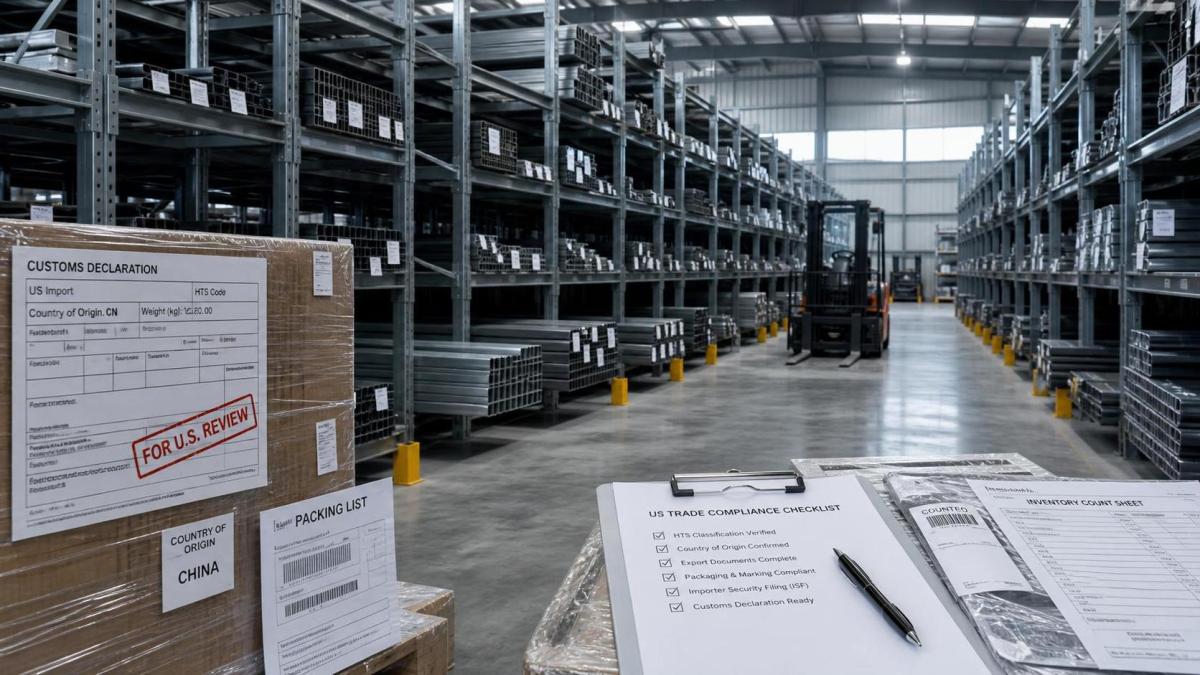
Given the stated effect on customs clearance compliance, companies should closely verify the consistency of product descriptions across quotations, invoices, packing documents, and shipment records. At this stage, the input does not provide detailed enforcement instructions, so the appropriate response is to review, verify, and prepare documentation rather than assume a new procedural standard has already been issued.
Monitor downstream procurement and channel communication
For suppliers serving warehouse, retail, and industrial logistics customers, communication with distributors, buyers, and channel partners may become more important. The key issue is not only duty exposure itself, but also whether delivery budgets, replenishment cycles, and procurement timing need adjustment in response to the extended order.
How This Change May Be Best Understood at This Stage
At this stage, it is more appropriate to understand the development as an already confirmed trade rule continuation rather than a speculative policy signal. The continuation of the antidumping duty order and its five-year extension are confirmed facts in the provided information. What remains open is how market participants will translate that confirmed rule into revised pricing, sourcing choices, customs practice, and channel strategy.
Analysis also suggests that businesses should avoid treating the development as a purely legal headline. The more meaningful issue for many market participants may be execution: whether trade documents, quotations, procurement decisions, and delivery commitments have been updated quickly enough to reflect the continued duty burden.
What This Means for Near-Term Decision-Making
The immediate significance of this case lies less in surprise and more in enforceable continuity. For companies trading boltless steel shelving into the U.S. market, the development is best treated as a live commercial and compliance condition that can affect pricing, import costs, and transaction structure now. A measured response would be to reassess active deals, validate documentation, and watch for any further clarification in market execution rather than assume either automatic disruption or no material change.
Basis of This Article and What Still Needs Verification
This article is based on the user-provided news title, event date, and event summary. For events of this type, businesses typically also track official announcements, releases from regulatory authorities, customs or trade administration updates, industry association information, standard-setting documents where relevant, and reporting by established media. No specific official source link was provided in the input, so the exact source document should still be independently verified.
Further attention should remain on any subsequent clarification affecting implementation practice, customs treatment, contract execution, market feedback, and how companies in the supply chain adjust procurement and delivery arrangements in response to the continued order.

By clicking 'Allow All', you agree to the storage of cookies on your device to enhance site navigation, analyze site usage and assist with our marketing efforts. Coo Cookie Notice
Please give us a message
SHANDONG LUBAO METAL GROUP CO., LTD.