


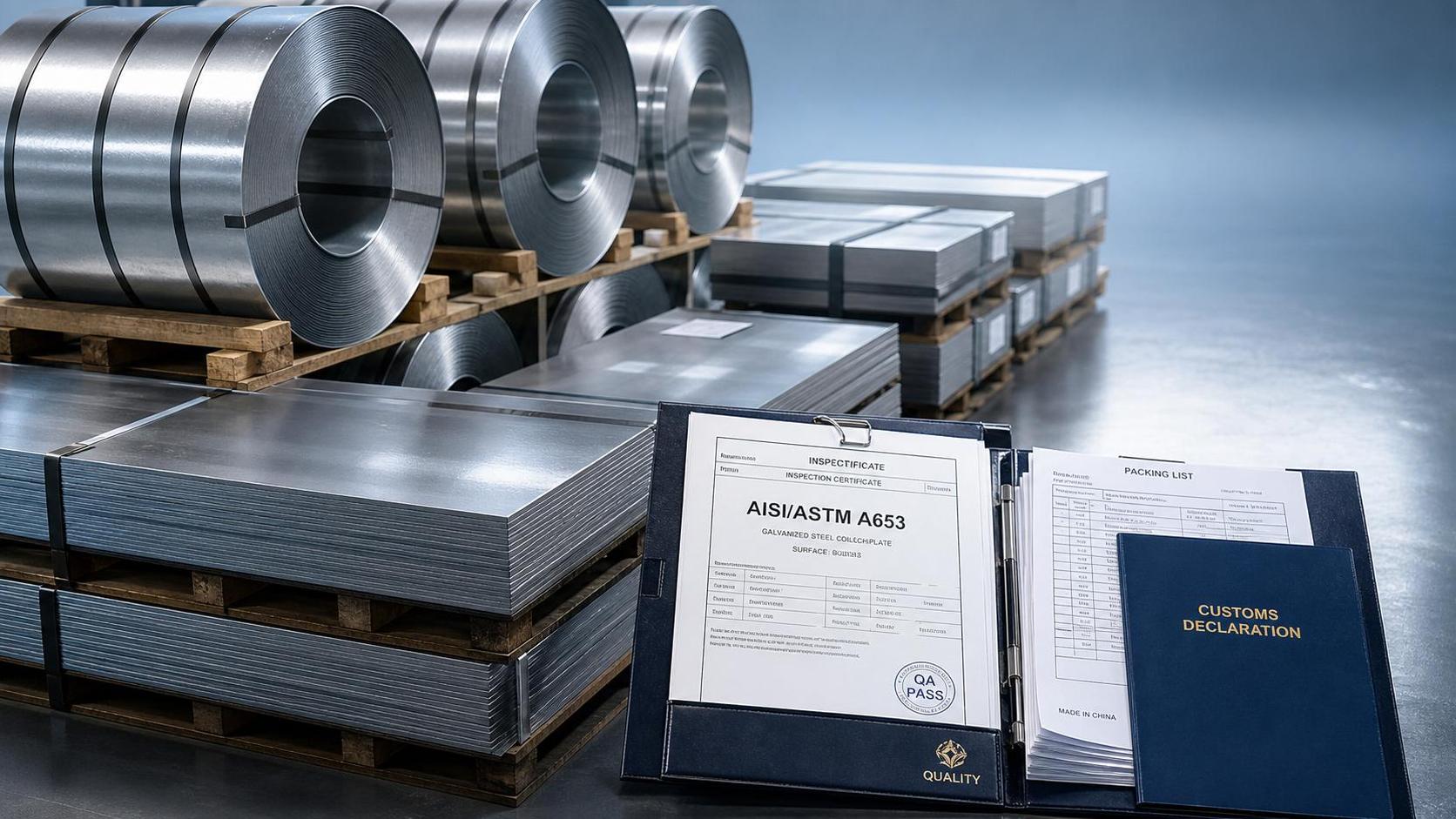
On June 29, 2026, the U.S. Department of Commerce announced a new annual anti-dumping administrative review covering galvanized steel sheets from China for shipments made between January 1 and December 31, 2025. For exporters, importers, distributors, and supply chain teams dealing with these products, the development matters because it can affect duty treatment, customs documentation, and compliance costs, with particular attention on products made to AISI/ASTM A653 standards.
What the announcement confirms
The confirmed fact is that the U.S. Department of Commerce has formally opened an annual anti-dumping administrative review for galvanized steel sheets originating in China. The review applies to export batches shipped during the 2025 calendar year. According to the provided information, the review is expected to directly affect the duty rates applied to exporters, the preparation of customs clearance documents, and the compliance costs borne by importers. The products specifically noted include those associated with AISI/ASTM A653 standards.
Where the impact is likely to be felt first
Export transactions may face renewed scrutiny
From an industry perspective, direct trading companies are likely to feel the effect first because duty treatment and document consistency are closely tied to transaction execution. What deserves closer attention is whether shipment records, product descriptions, and supporting paperwork for 2025 exports are complete and internally consistent.
Importers and distributors may need to reassess supplier exposure
Analysis shows that overseas importers and distribution channels may face a more immediate operational burden. The provided information already points to higher compliance costs and a need to revisit supplier qualifications, pricing terms, and documentation practices. In practical terms, this can affect landed-cost calculations, contracting assumptions, and internal approval processes.
Standards-linked products require closer document alignment
For businesses handling galvanized steel sheets produced to AISI/ASTM A653 standards, the key issue is not only the product itself but also how the product is described and supported in trade and customs files. Observably, any mismatch between technical specifications and clearance documentation could become a more sensitive point during review-related compliance checks.
Service providers in the trade chain may see added workload
Customs-related service providers, logistics coordinators, and trade compliance teams may also be affected because the review increases the importance of accurate document preparation and supplier-side verification. Their role becomes more critical where shipment history, product classification, and supporting records need to be checked more carefully.
What companies should watch now
Track official wording and procedural updates
Analysis shows that companies should pay close attention to any further official language tied to the administrative review. The current announcement establishes that the review has started, but the practical effect on individual transactions and counterparties will depend on how subsequent procedural requirements are communicated.
Check 2025 shipment files against current compliance needs
For exporters and importers linked to the covered period, a near-term priority is to review shipment records from January 1 to December 31, 2025. What deserves closer attention is whether product specifications, customer-facing documents, and customs paperwork are aligned well enough to support consistent treatment during the review process.
Revisit pricing terms and allocation of compliance risk
Observably, overseas buyers and distributors may need to re-examine price terms with suppliers because changes in applicable duty treatment can alter cost assumptions. This does not confirm any final outcome, but it does mean commercial teams should understand where compliance-related costs or documentation responsibilities sit in existing agreements.
Strengthen supplier qualification and customer communication
From an industry perspective, the announcement is also a prompt to review supplier qualification standards and communication with customers. Where product scope includes AISI/ASTM A653-related items, companies may need clearer internal checks on product descriptions, supporting documents, and response readiness for counterparties asking about review exposure.
Why this should be read as a live trade signal
Analysis shows that this development is better understood as an active procedural signal rather than a final market outcome. The confirmed fact is the launch of the annual review; the wider commercial effect will depend on how businesses involved in the covered shipments manage documentation, pricing assumptions, and supplier verification. For the industry, the immediate significance lies less in broad market conclusions and more in the compliance and transaction discipline now required.
How to interpret the current stage
At this stage, it is more appropriate to understand the announcement as a short-term operational issue with possible wider implications that still require observation. It already matters for exporters, importers, and distributors handling Chinese galvanized steel sheets, especially where duty application, customs records, and AISI/ASTM A653-related documentation are involved. However, based on the provided information alone, it should not yet be treated as a confirmed long-term shift in trade conditions.
Basis of this article and what still needs verification
This article is based on the user-provided news title, event date, and event summary. For developments of this kind, relevant source types typically include official government notices, company disclosures, industry association updates, authoritative media reporting, and standards-related documents. A specific official source link was not provided in the input, so that point still requires ongoing verification. Follow-up attention should remain on any further official statements, procedural clarifications, and practical compliance implications for covered shipments and counterparties.

By clicking 'Allow All', you agree to the storage of cookies on your device to enhance site navigation, analyze site usage and assist with our marketing efforts. Coo Cookie Notice
Please give us a message
SHANDONG LUBAO METAL GROUP CO., LTD.