


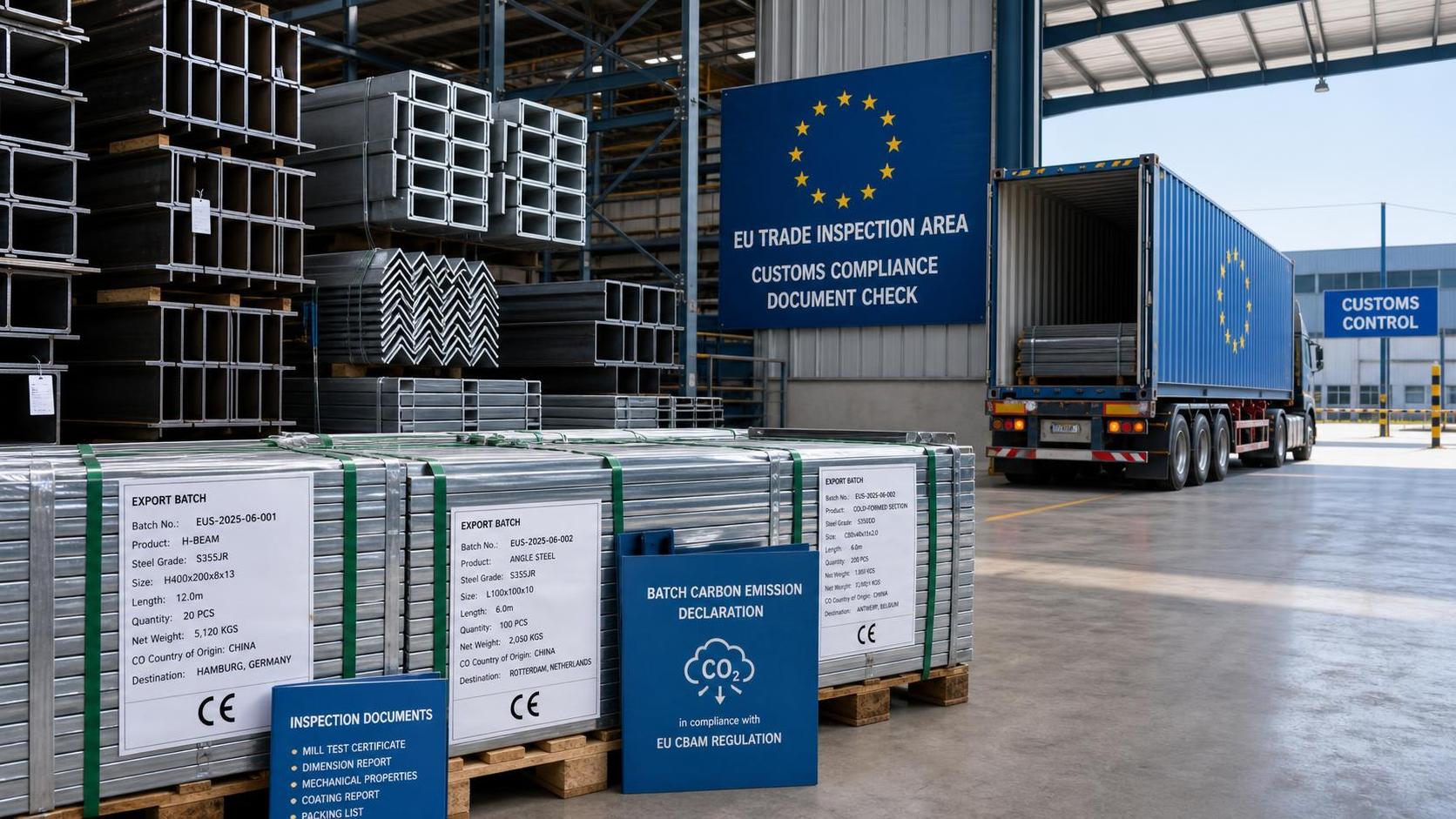
On July 26, 2026, the European Commission formally brought the third phase of CBAM into effect for structural steel products exported to the EU, putting immediate attention on hot-rolled and cold-formed sections, H-beams, angle steel, and related products. For exporters, distributors, manufacturers, and downstream buyers tied to EU-bound orders, this matters because customs clearance is now linked not only to product movement but also to batch-level embedded carbon reporting and third-party verification, with direct implications for delivery timing and inventory planning.
What Has Taken Effect From July 26
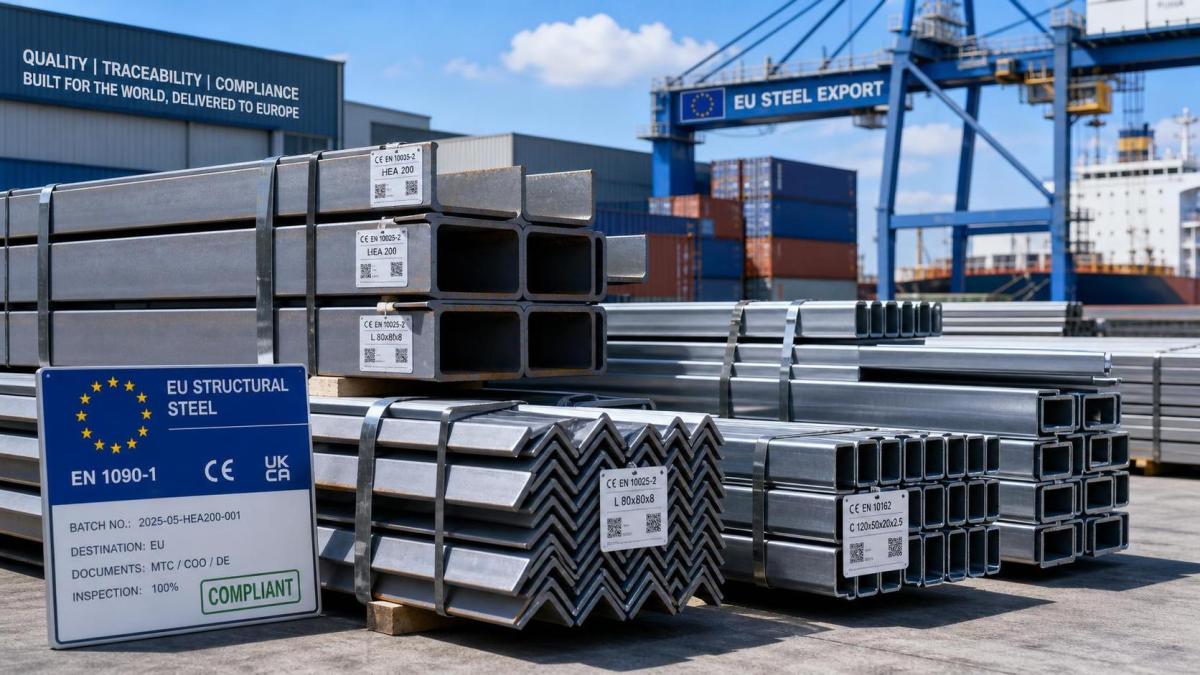
According to the provided event information, from July 26, 2026, CBAM Phase 3 formally covers all structural steel products exported to the European Union, including hot-rolled and cold-formed sections, H-beams, and angle steel.
Exporters are required to declare the measured embedded carbon emissions of each batch through the EU Transaction Registry system. Those declarations must also undergo verification by an EU-recognized third party.
The same information states that non-compliant declarations may lead to customs delays or rejection of shipments. This can directly affect overseas distributors' inventory planning and final delivery schedules.
Where The Pressure Will Be Felt First
Trade flows face a tighter documentation threshold
From an industry perspective, direct exporters are likely to feel the earliest impact because the new requirement is tied to each shipment batch rather than only to a broad annual compliance approach. The main pressure point is the handoff between shipment preparation, emissions reporting, and customs clearance. What deserves closer attention is whether batch documentation, reporting timing, and verification readiness are aligned before cargo reaches the EU entry process.
Manufacturing operations now connect more directly to reporting accuracy
For processors and manufacturers producing structural steel sections for the EU market, the impact is likely to appear in the link between production records and declared embedded carbon values. Analysis shows that the issue is not only regulatory awareness, but whether product-level or batch-level emissions information can be translated into a form that supports submission and verification. Companies involved in export-oriented fabrication should pay close attention to how production data and shipment data are matched.
Distributors and channel partners face delivery planning risk
Overseas distributors and circulation businesses may be affected even if they are not the party making the original declaration. The provided information makes clear that delayed or rejected customs processing can disrupt inventory planning and final delivery. Observably, this places greater importance on visibility into supplier compliance status, shipment documentation completeness, and lead-time buffers for EU-bound stock.
Downstream buyers may focus more on execution reliability
For end users and procurement-side participants relying on structural steel deliveries, the likely impact is operational rather than theoretical. If a shipment is delayed at customs or refused entry, project schedules and replenishment timing may be affected. What deserves closer attention is the supplier's ability to provide compliant batch data and verified declarations in step with the delivery schedule.
What Companies Should Watch In Daily Execution
Batch-level emissions reporting is now a shipment issue
Companies serving the EU market should closely track whether each batch of covered products has the required measured embedded carbon data ready for submission through the EU Transaction Registry. The practical issue here is execution discipline: missing or incomplete batch information may become a shipment bottleneck rather than a back-office issue.
Third-party verification is part of the compliance chain
The event summary makes clear that declarations must be verified by an EU-recognized third party. Analysis shows that businesses should treat verification capacity, document readiness, and timing coordination as part of shipment planning. The key point is that reporting and verification now sit inside the delivery workflow, not outside it.
Covered product scope needs to be checked carefully
What deserves closer attention is whether a company's export portfolio includes the structural steel categories explicitly mentioned in the event information, such as hot-rolled and cold-formed sections, H-beams, and angle steel. For businesses handling mixed product lines, this is a practical classification and order-management issue tied to market access.
Customer communication and delivery contingency matter more
Because non-compliant declarations may lead to customs delay or refusal, exporters, suppliers, and logistics-facing teams should pay attention to how they communicate shipment status, compliance readiness, and possible timing changes to EU customers and distribution partners. The distinction between a policy requirement and actual on-time delivery performance is likely to become more visible in day-to-day transactions.
Why This Looks Like More Than A Procedural Update
Analysis shows that this development is better understood as an operational tightening of market access conditions for certain steel exports to the EU, rather than as a symbolic policy headline alone. The requirement to submit measured embedded carbon emissions for each batch, combined with third-party verification, moves compliance deeper into the transaction process itself.
Observably, this is also a signal that carbon-related reporting is becoming inseparable from shipment execution for covered products. At the same time, it should not be overstated beyond the provided facts. The current information confirms the start of coverage, the reporting mechanism, the verification requirement, and the customs risk of non-compliance; broader commercial effects still need continued observation in actual trade practice.
How The Industry May Best Read This Development
At this stage, it is more appropriate to understand this as an immediate compliance change with longer-term implications, rather than a fully settled outcome for every participant in the steel supply chain. The near-term meaning is clear: EU-bound structural steel exports now face a stricter reporting and verification threshold at batch level. The broader industry meaning will depend on how consistently companies can connect emissions data, documentation, verification, customs processing, and delivery commitments.
For now, the most rational reading is that this is both a live operational requirement and a continuing industry signal. It warrants close monitoring not because every consequence is already known, but because the compliance standard has already moved into effect.
Basis Of This Article And Ongoing Verification
This article is based on the user-provided news title, event date, and event summary concerning the European Commission's formal implementation of CBAM Phase 3 for structural steel exports to the EU on July 26, 2026.
For this type of development, relevant source categories typically include official announcements, company disclosures, industry association updates, authoritative media reporting, and standards or compliance-related documents. A specific official source link was not provided in the input, so the underlying wording and any subsequent implementation details still require continued verification.
Areas that remain worth tracking include any later official clarification on covered products, reporting practice through the EU Transaction Registry, verification implementation, and how customs enforcement affects delivery timelines in actual transactions.

By clicking 'Allow All', you agree to the storage of cookies on your device to enhance site navigation, analyze site usage and assist with our marketing efforts. Coo Cookie Notice
Please give us a message
SHANDONG LUBAO METAL GROUP CO., LTD.