



On July 25, 2026, the U.S. Department of Commerce announced an expedited sunset review of the anti-dumping duty order covering hot-rolled coil (HRC) from China. The review matters because it is not only a procedural update: it is a rule-driven checkpoint that can determine whether the current duty levels remain in place, with direct implications for import pricing, customs compliance, purchasing decisions, and longer-term supply chain planning for companies connected to the U.S. steel trade.
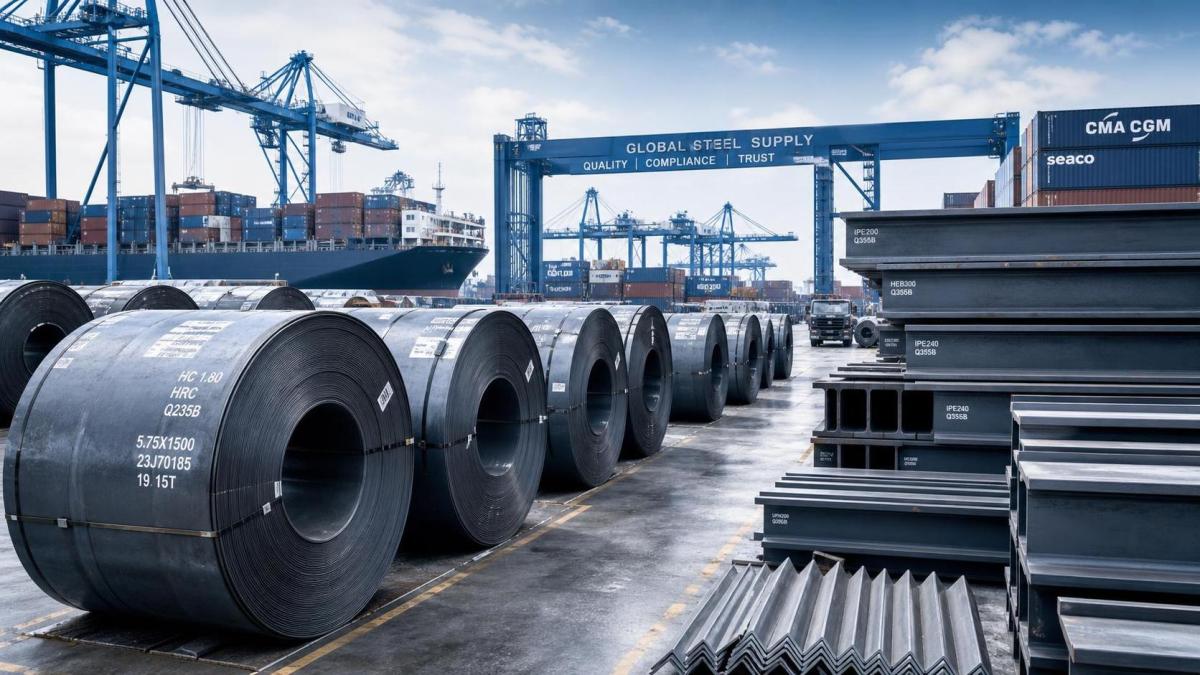
What the Review Now Puts on the Table
The confirmed facts are limited but commercially important. The action concerns the first expedited sunset review of the anti-dumping duty order on Chinese-origin HRC. According to the provided event summary, the review was formally initiated by the U.S. Department of Commerce on July 25, 2026. Its stated purpose is to determine whether the existing anti-dumping duty rates, currently ranging from 12.9% to 246.2%, should continue. The expected timing for the result is January 2027.
No final determination has been provided in the input. At this stage, the confirmed development is the launch of the review process itself and the fact that the current duty framework remains under examination.
Where the Commercial Pressure May Appear First
For U.S. importers, cost exposure and entry compliance move back into focus
From an industry perspective, U.S. importers are among the first parties likely to feel the practical effect of this review. Their exposure is tied to procurement budgeting, customs treatment, and contract assumptions linked to Chinese-origin HRC. What deserves closer attention is whether internal purchasing models, landed cost calculations, and import documentation workflows are being updated to reflect a review period that may affect future sourcing decisions.
The key operational concern is not that the rules have already changed, but that the review keeps the existing duty regime under active consideration. That can affect how importers assess booking timing, supplier commitments, and compliance review at the point of customs clearance.
For buyers and manufacturers, sourcing plans may require tighter review
Companies that buy HRC as an input for downstream manufacturing may need to reassess procurement flexibility. Analysis shows that when a duty review is underway, sourcing teams typically need clearer visibility on origin, pricing assumptions, and delivery timing, especially where supply contracts depend on stable import cost expectations.
The practical issue here is supply planning rather than a confirmed change in market access. Businesses using HRC should pay closer attention to how origin-sensitive procurement terms, order timing, and delivery arrangements may need to be checked against the review timeline leading toward the expected January 2027 outcome.
For traders and supply chain service providers, paperwork discipline becomes more important
Trading firms, customs intermediaries, and other supply chain service providers may also face a higher documentation burden during periods of regulatory review. Observably, the relevance of origin records, customs filing accuracy, contract descriptions, and shipment-related supporting documents increases when anti-dumping measures remain under scrutiny.
This does not mean new filing rules have been confirmed in the input. It does mean that service providers operating around affected HRC shipments should treat documentation consistency and compliance checks as a more immediate risk-control issue.
What Companies Should Watch Before the Outcome
Monitor official wording rather than assume the result
Analysis shows that the most important immediate step is to follow subsequent official statements closely. The current development is the initiation of a review, not the publication of a final decision. Companies should avoid treating the continuation, revision, or removal of existing duty levels as settled before the announced review process reaches its conclusion.
Recheck origin-linked documents and internal compliance files
What deserves closer attention is the consistency of records tied to product origin, transaction documentation, and customs-related files for HRC shipments connected to the U.S. market. Even without new execution details in the input, this event is a signal for companies to review whether their document sets are complete, current, and aligned with existing trade compliance requirements.
Stress-test purchasing schedules and supply commitments
For procurement and planning teams, the review period creates a practical need to revisit assumptions behind purchase timing, supplier allocation, and inventory coverage. This is particularly relevant where delivery commitments or pricing terms were built around expectations of stable duty treatment. The input does not confirm any new delivery rule, but it does justify closer review of schedule risk and sourcing concentration.
Keep commercial terms adaptable through the review window
Observably, counterparties involved in U.S.-linked HRC business may need to examine whether contract language, quotation validity, and commercial responsibility for duty-related cost exposure remain workable through the period before the expected January 2027 result. This is a risk-management consideration, not a confirmed rule change beyond the review itself.
Why This Looks More Like an Execution Signal Than a Final Shift
Analysis shows that this development is better understood as an execution signal within an existing trade remedy framework rather than as a completed policy change. The review matters because it reactivates attention around current anti-dumping exposure and pushes affected businesses to revisit compliance and sourcing discipline. At the same time, the input does not support a conclusion on the final direction of the case.
From an industry perspective, the most rational reading is that the market now has a defined review window and a defined area of regulatory uncertainty. That is enough to influence planning, but not enough to justify certainty about the eventual duty outcome.
How the Market Should Read the Current Stage
The immediate significance of this case lies in process, not finality. The launch of the expedited sunset review confirms that the existing anti-dumping duty order on Chinese HRC remains an active trade compliance issue for the U.S. market. It is more appropriate to understand this as a live regulatory development that requires monitoring, document discipline, and procurement reassessment, rather than as a completed change in market conditions.
A measured conclusion is that businesses connected to Chinese-origin HRC and U.S. import activity should treat the period leading to January 2027 as one that may shape cost planning and compliance readiness, while avoiding assumptions that go beyond the confirmed facts.
Basis of This Article and What Still Needs Verification
This article is based on the user-provided news title, event date, and event summary. For developments of this kind, relevant source categories usually include official government notices, releases from regulatory or trade authorities, customs or trade administration information, industry association updates, standard-setting documents, and reporting by authoritative business or trade media.
No specific official source link was provided in the input, so the underlying source document still requires ongoing verification. Observably, the points that still need to be watched include any later official wording, execution guidance, customs-related interpretation, procurement document changes, tender language adjustments, industry feedback, and how companies actually implement compliance and sourcing responses during the review period.

By clicking 'Allow All', you agree to the storage of cookies on your device to enhance site navigation, analyze site usage and assist with our marketing efforts. Coo Cookie Notice
Please give us a message
SHANDONG LUBAO METAL GROUP CO., LTD.