


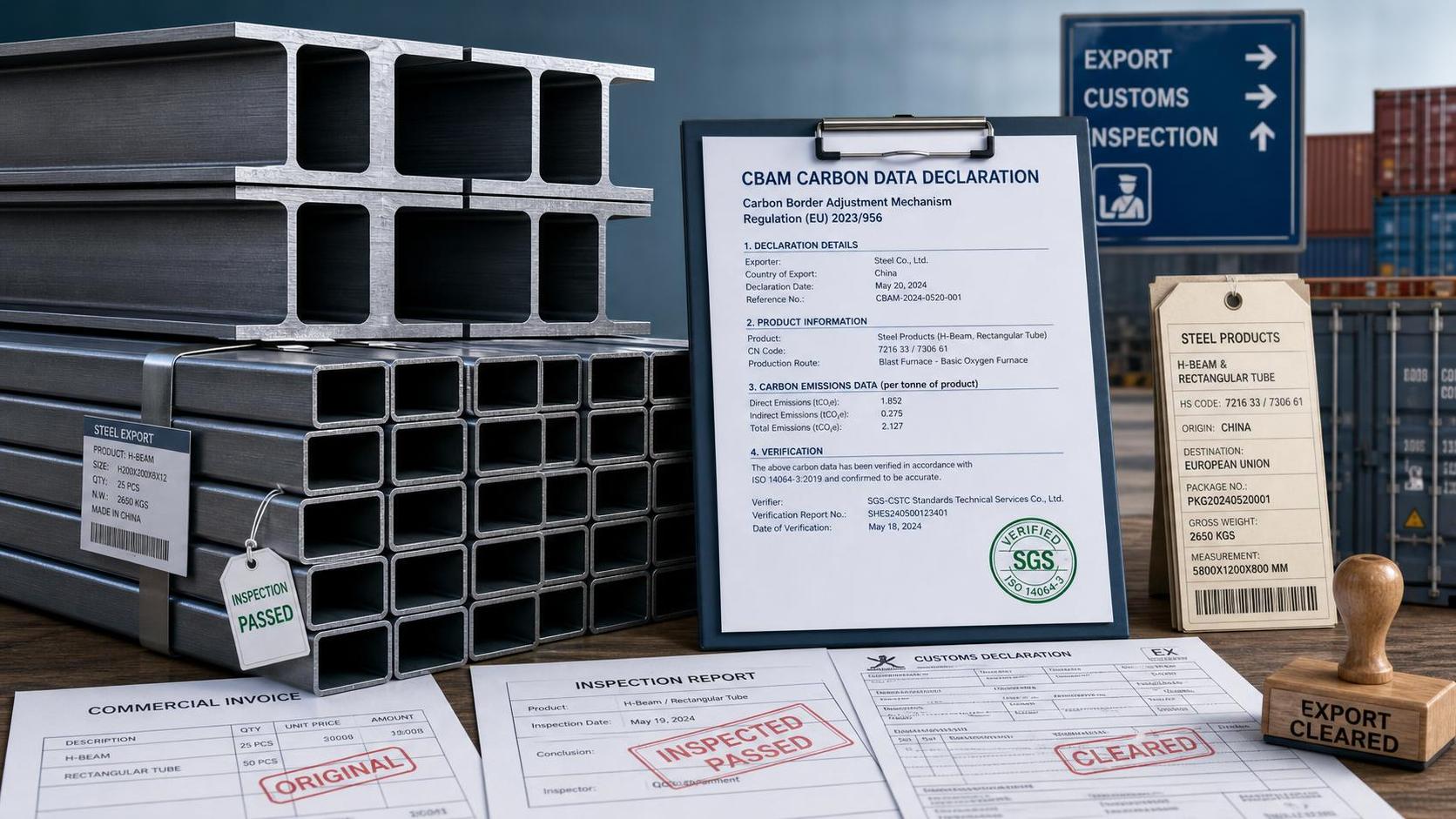
From October 1, 2026, the European Commission’s new CBAM verification requirement moves from policy notice to import gatekeeper for certain steel sections entering the EU. Under the rule set out in Commission Implementing Regulation (EU) 2026/1389, exporters of products such as hot-rolled H-beams and cold-formed rectangular tubes must submit certified life-cycle embedded carbon data through the CBAM system, or face customs refusal. For steel section exporters, buyers, compliance teams, and supply chain service providers, this is worth close attention because the change directly connects emissions disclosure with shipment clearance, documentation readiness, and pricing structure.
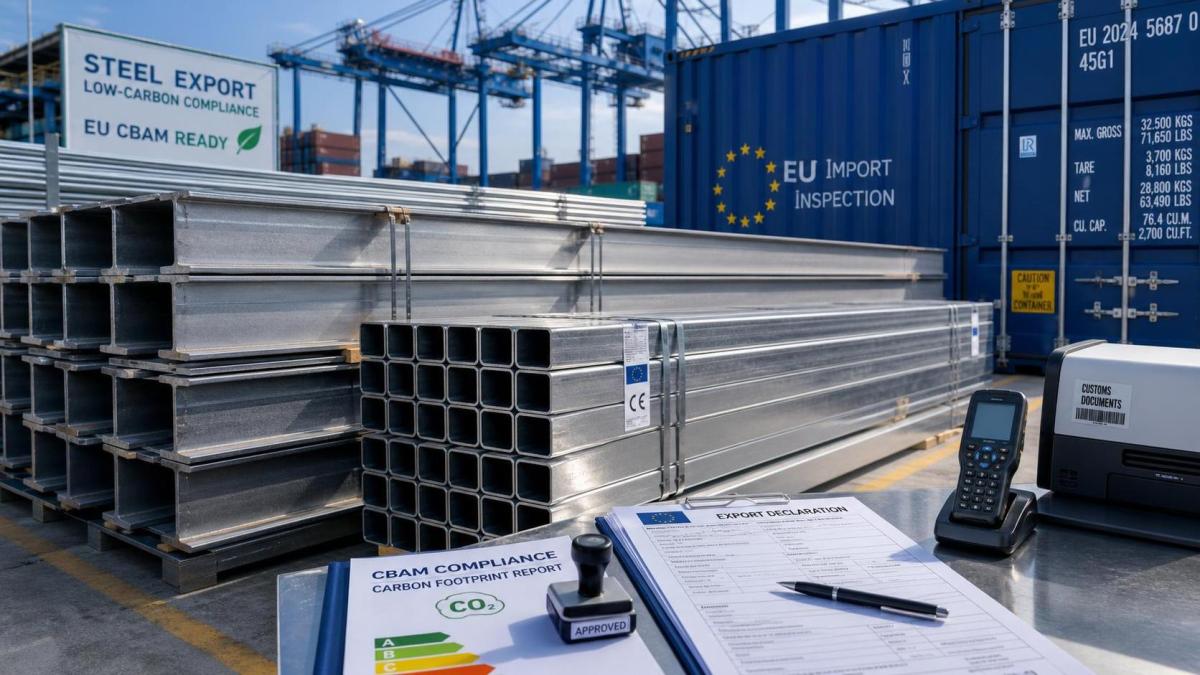
What the New Requirement Formally Sets Out
The confirmed timeline in the provided information is clear. The European Commission issued an official notice on July 16, 2026, identified as Commission Implementing Regulation (EU) 2026/1389. According to that notice, starting on October 1, 2026, all structural steel sections exported to the EU, including hot-rolled H-beams and cold-formed rectangular tubes, must report certified life-cycle embedded carbon emissions in tCO2e/t through the CBAM system.
The requirement is not described as optional. The provided information states that where the required embedded carbon data is not submitted, customs clearance will be refused. The same information also confirms that the rule directly affects Chinese steel section exporters in three practical areas: selection of qualified third-party verification providers, construction of data traceability systems, and adjustment of pricing structures.
Where the Impact Will Likely Be Felt First
Export transactions now depend on verified carbon documentation
From an industry perspective, direct exporters are the first group likely to feel the pressure because the rule ties shipment execution to certified emissions reporting. The immediate business impact is likely to appear in export documentation preparation, internal review of shipment files, and coordination between sales, compliance, and logistics teams. What deserves closer attention is whether a company’s existing export process can produce CBAM-ready emissions information in a form that supports customs clearance.
Manufacturing operations will face higher traceability demands
Processing and manufacturing companies involved in hot-rolled H-beams, cold-formed rectangular tubes, and other structural sections may be affected because the reporting requirement concerns life-cycle embedded carbon data rather than a simple product declaration. Analysis shows that the pressure point is not only emissions calculation itself, but also whether the underlying production and source data can be traced, organized, and presented in a verifiable format.
Verification and compliance service providers gain a larger role
Service providers involved in third-party verification, documentation support, and cross-border compliance may see greater demand because the provided information specifically highlights the choice of third-party verification qualifications. Observably, this creates a more important screening step for exporters: not just obtaining a report, but confirming whether the verification arrangement is suitable for the declared CBAM submission requirement.
EU buyers and downstream project participants may tighten document requests
Purchasers and downstream users in EU-facing supply chains may also be affected because customs refusal changes the risk profile of late or incomplete compliance. Analysis shows that the practical effect may appear in pre-shipment confirmation, contract communication, and timing expectations, especially where delivery schedules depend on smooth customs processing.
What Companies Should Watch in Practical Terms
Verifier qualification is now a business-critical choice
The provided information specifically identifies third-party verification qualification as a direct point of impact. For exporters, this means verifier selection should be treated as a transaction-critical decision rather than a back-office formality. The immediate issue is whether verification work can support CBAM system submission in time for shipment.
Traceability systems need to match reporting reality
The rule’s emphasis on certified life-cycle embedded carbon data makes traceability a core operational issue. What deserves closer attention is the gap between having internal production data and having data that can be consistently traced, reviewed, and submitted in a compliance context. Companies with fragmented records may find that the reporting burden appears first in data collection and coordination rather than only in calculation.
Pricing discussions may need to reflect new compliance costs
The provided information also points to changes in pricing structure. Analysis shows that this should be understood as a commercial issue as much as a compliance one. Once carbon reporting, verification, and document preparation become part of the shipment pathway, exporters and buyers may need clearer communication on which compliance-related costs are included in quotations and how timing risks are handled.
Policy wording and execution should be tracked separately
Observably, one practical task for companies is to distinguish between the formal requirement already stated and any later clarifications on execution. The confirmed fact is that certified embedded carbon data must be submitted through the CBAM system from October 1, 2026 for the covered structural sections. The part that still requires ongoing attention is how businesses interpret operational details in day-to-day order handling and customs preparation.
Why This Looks Like More Than a Short-Term Filing Change
Analysis shows that this development is better understood as a concrete compliance threshold rather than a symbolic policy signal. The reason is straightforward: the provided information links carbon disclosure directly to customs clearance. At the same time, it is also appropriate to understand this as an ongoing regulatory development, because the commercial and operational consequences will depend on how exporters, verifiers, buyers, and service providers adapt their processes after the requirement takes effect.
From an industry perspective, the stronger signal is that emissions data for covered steel sections is moving closer to the status of essential trade documentation. That does not by itself establish a complete long-term market outcome, but it does indicate that carbon reporting capability is becoming part of export readiness for affected products.
How the Market May Best Read This Development Now
At this stage, the most balanced reading is that the October 2026 requirement creates an immediate procedural change with broader strategic implications. In the short term, the issue is execution: certified data submission, customs clearance, verifier selection, and document consistency. In a longer view, the development signals that carbon data management is becoming more tightly connected to market access for covered steel section exports to the EU.
It is more appropriate to understand this neither as a routine paperwork update nor as a basis for sweeping market conclusions. The clearer takeaway is that affected companies should treat it as a live compliance requirement with direct transaction consequences, while continuing to monitor how implementation works in practice.
Basis of This Article and What Still Needs Verification
This article is based on the user-provided news title, event date, and event summary concerning the European Commission’s CBAM transitional verification requirement for imported steel sections. The factual basis used here includes the stated event date of October 1, 2026, the cited official notice dated July 16, 2026, and the summary of scope and customs consequences provided in the input.
For this type of industry update, relevant source categories would typically include official government or Commission notices, company disclosures, industry association releases, authoritative media reporting, and standards-related documents. A specific official source link was not provided in the input, so the exact source document path still requires continued verification. Follow-up attention should remain on any further official wording, implementation clarifications, and practical interpretation affecting covered steel section exports.

By clicking 'Allow All', you agree to the storage of cookies on your device to enhance site navigation, analyze site usage and assist with our marketing efforts. Coo Cookie Notice
Please give us a message
SHANDONG LUBAO METAL GROUP CO., LTD.