


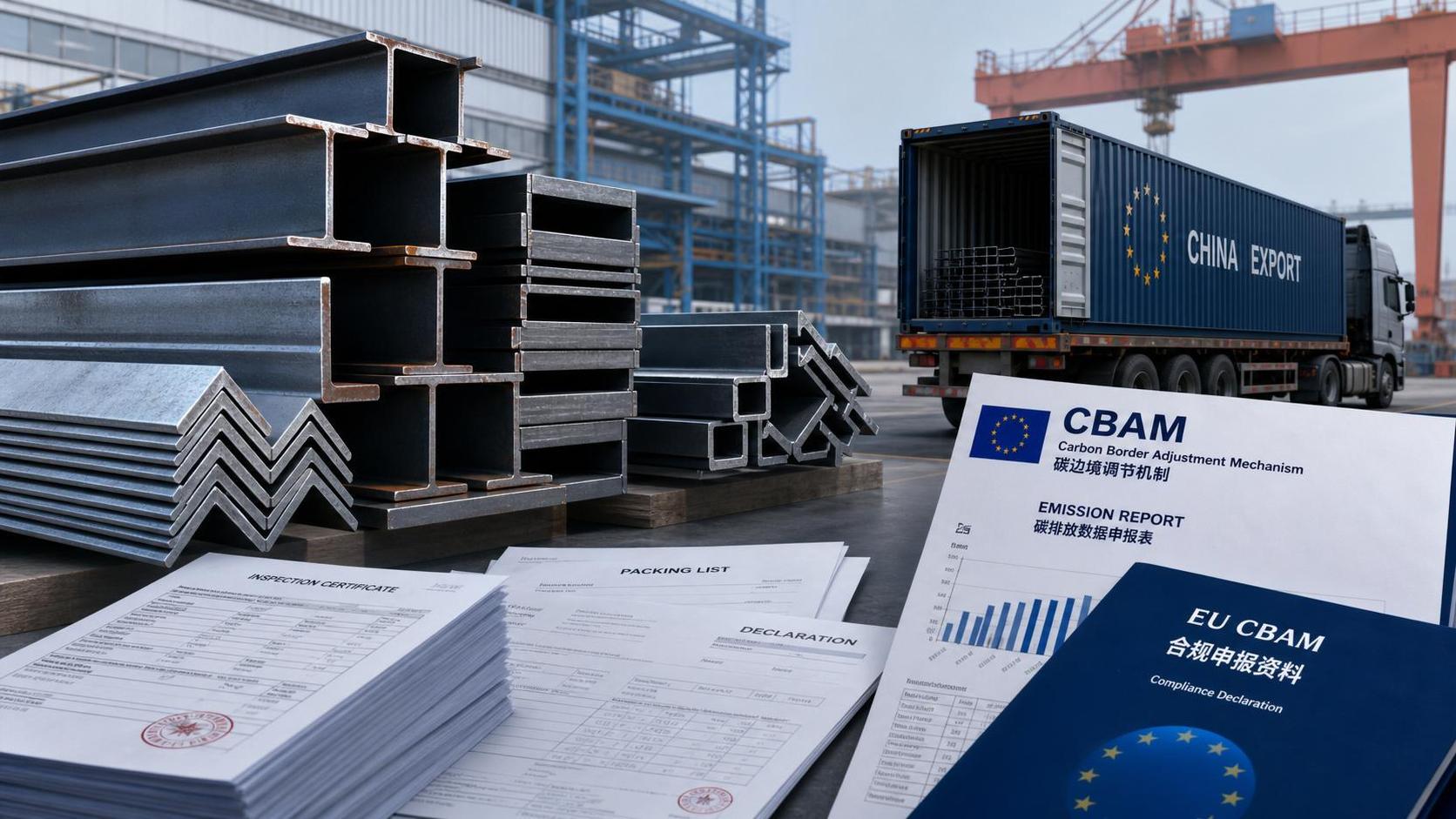
From July 1, 2026, the EU has moved the steel segment of its Carbon Border Adjustment Mechanism (CBAM) into the charging stage for products including hot-rolled sections, H-beams, and angle steel. For Chinese exporters shipping these products to the EU, the immediate issue is no longer only product delivery, but whether verified embedded carbon emissions data and electricity cost data can be submitted through the CBAM registration system in time. The development matters not only to exporters, but also to importers, buyers, customs-facing teams, and supply chain service providers because it directly affects clearance timing, cost calculations, and the allocation of compliance responsibility in transactions.
What Has Taken Effect on July 1
According to the information provided, the EU began the formal charging phase of CBAM for steel products on July 1, 2026. The products referenced include hot-rolled structural steel, H-beams, and angle steel.
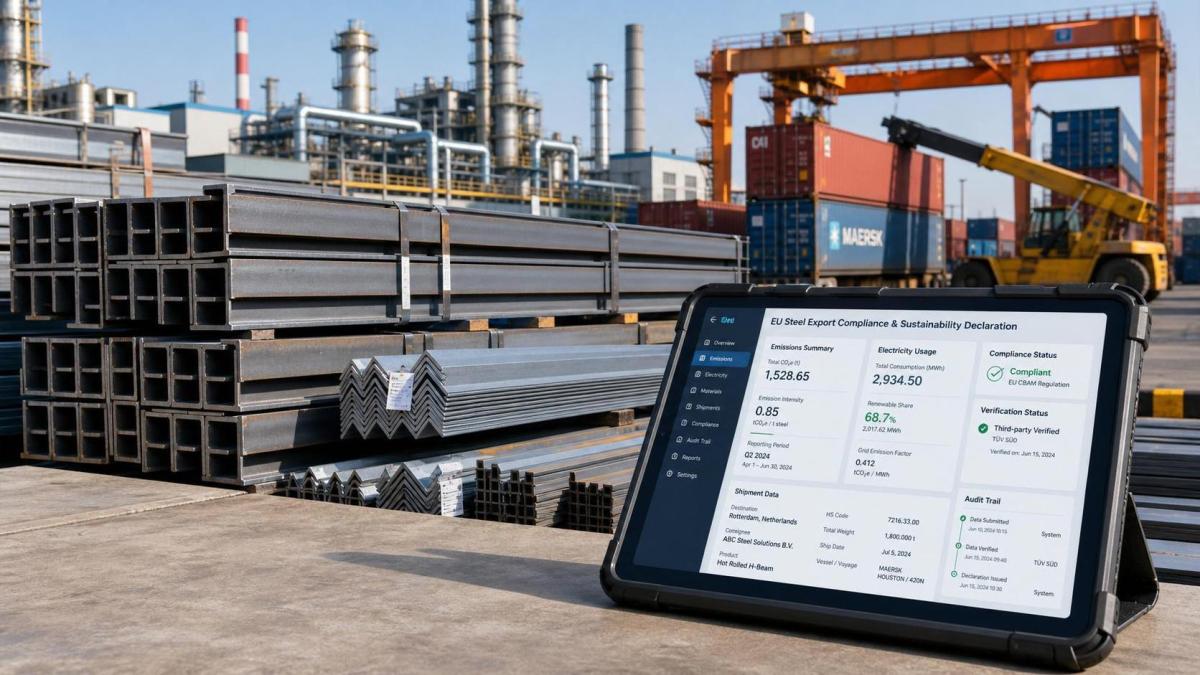
Chinese steel and section exporters selling into the EU are required to submit verified embedded carbon emissions data and electricity cost data through the CBAM registration system. If the required information is not submitted, a differential carbon charge of EUR 124 per ton will apply.
The information also indicates that this requirement directly affects customs clearance timeliness, cost accounting, and how compliance responsibilities are shared between suppliers and buyers.
Where the Pressure Will Be Felt First
Export transactions are becoming more document-dependent
From an industry perspective, direct trading companies are likely to feel the impact first because the requirement is tied to whether the necessary emissions and electricity data can be filed through the CBAM system. The pressure point is therefore not only pricing, but also document readiness, data verification, and submission timing before goods move through clearance.
Manufacturers and processors face a new data-delivery task
For steel mills and processing companies supplying hot-rolled sections, H-beams, angle steel, and related products for EU-bound orders, the issue is likely to center on whether operational data can support verified reporting. Analysis shows that even where sales contracts are handled by trading entities, the underlying emissions information requirement can still reach back to the production side because exporters cannot complete filing without usable source data.
Buyers and import-side teams will need clearer responsibility lines
For EU buyers and procurement teams, the information points to a more direct compliance linkage in purchasing decisions. What deserves closer attention is how responsibility for data accuracy, submission timing, and any resulting carbon charge is allocated in commercial arrangements. The summary provided already signals that buyer-side compliance burden sharing is part of the practical impact.
Logistics and customs support services may face timing risk
Supply chain service providers, especially those involved in customs coordination and delivery scheduling, may be affected where filings are incomplete or delayed. Observably, the issue here is less about physical transport itself and more about whether compliance-related data arrives in a form that supports smooth clearance.
What Companies Should Watch in Practice
Whether the required data can be verified and submitted on time
The most immediate operational question is whether embedded carbon emissions data and electricity cost data are available in a verified form and can be uploaded through the CBAM registration system without delaying shipment handling.
Which product lines and EU orders are exposed first
Companies with exports involving hot-rolled sections, H-beams, angle steel, and similar steel products should pay close attention to which ongoing or upcoming EU orders fall within the charging stage from July 1, 2026. In practice, this is a product-and-destination review issue before it becomes a settlement issue.
How carbon costs are reflected in quotations and settlement
Analysis shows that the EUR 124 per ton differential carbon charge, where required data is not submitted, creates a direct cost variable. That means quotation logic, contract terms, and internal cost accounting may need closer alignment with compliance execution rather than treating the issue as a separate administrative step.
How compliance duties are divided with customers and suppliers
What deserves closer attention is the commercial side of compliance. The information provided already notes that buyer responsibility sharing is affected. For companies in active transactions, this makes supplier qualification, document requests, communication records, and delivery planning more important in day-to-day execution.
Why This Looks Like More Than a One-Off Filing Requirement
Analysis shows that this development is better understood as a concrete operating requirement rather than a symbolic policy signal. The charging phase has begun, a filing obligation has been specified, and a differential carbon charge has been identified for non-submission. That gives the issue immediate relevance for execution teams.
At the same time, it is more appropriate to understand this as part of an ongoing compliance framework rather than a single settled outcome. Observably, the practical effect on each company will depend on product mix, EU exposure, internal data readiness, and how responsibilities are allocated across the supply chain. For that reason, the industry still needs to keep watching implementation details and business responses as they emerge.
How This News Is Best Understood Now
At this stage, the clearest industry meaning is that CBAM compliance for steel exports to the EU has moved into a stage where documentation quality, timing, and cost exposure are directly connected. The development should be read neither as a routine customs update nor as a fully concluded market outcome. It is more appropriate to understand it as an immediate operational change with longer-term compliance implications for exporters, manufacturers, buyers, and service providers linked to EU-bound steel trade.
Basis of This Article and What Still Needs Checking
This article is based on the user-provided news title, event date, and event summary. The confirmed facts used here are limited to the stated start date of July 1, 2026, the move into the formal charging stage of EU CBAM for specified steel products, the requirement for Chinese exporters to submit verified embedded carbon emissions data and electricity cost data through the CBAM registration system, the stated EUR 124 per ton differential carbon charge for non-submission, and the noted impact on clearance timing, cost accounting, and buyer compliance responsibility sharing.
For this type of industry development, relevant source categories usually include official announcements, company disclosures, industry association updates, authoritative media reporting, and standard-setting or regulatory documents. A specific official source link was not provided in the input, so further verification is still necessary. Continued attention should focus on any subsequent official wording, implementation details affecting filing and verification, and how compliance responsibilities are handled in actual export transactions.

By clicking 'Allow All', you agree to the storage of cookies on your device to enhance site navigation, analyze site usage and assist with our marketing efforts. Coo Cookie Notice
Please give us a message
SHANDONG LUBAO METAL GROUP CO., LTD.