


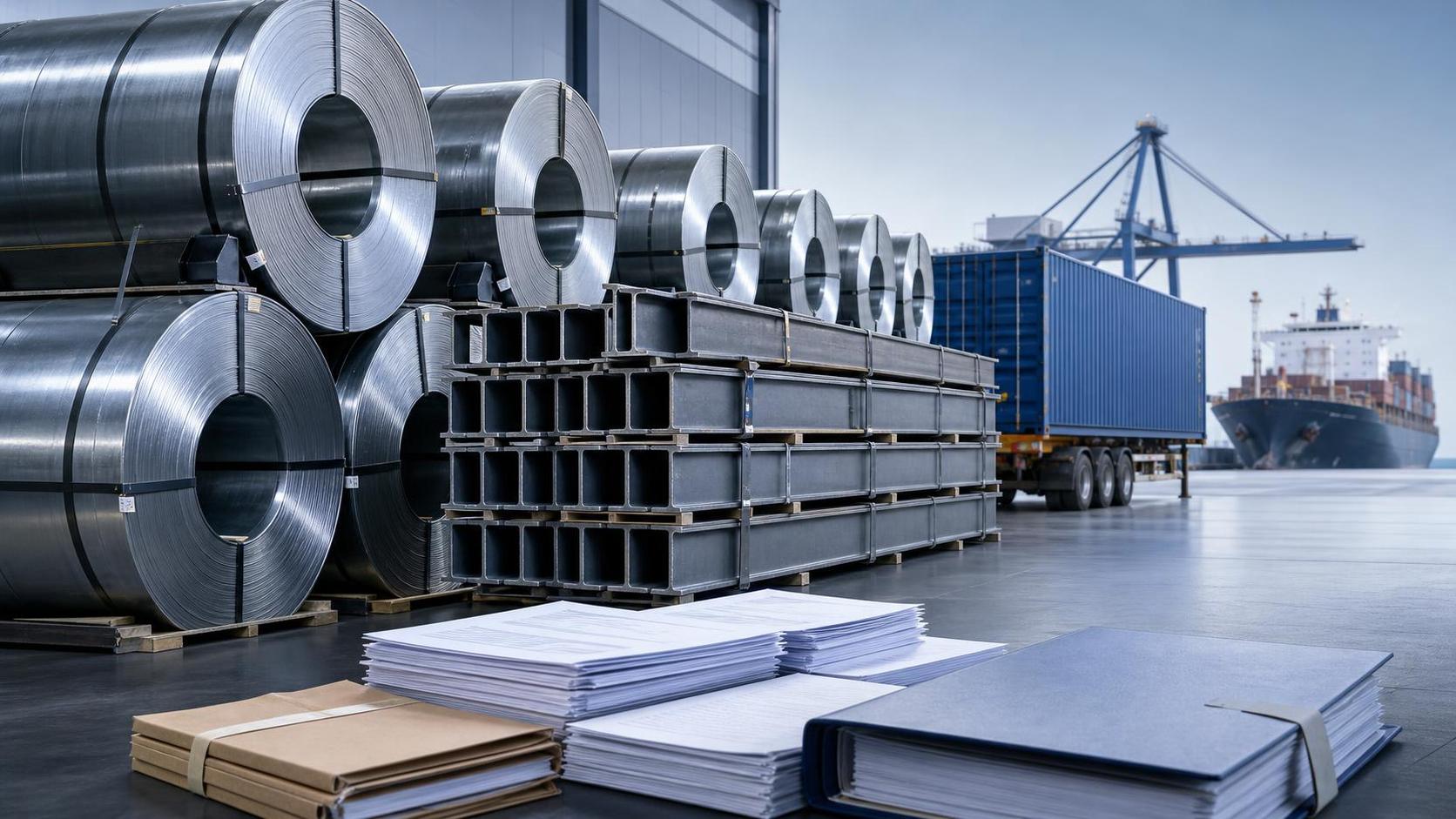
On August 1, 2026, the European Commission formally moved the CBAM transition period for certain steel imports into a stricter compliance stage by requiring quarterly carbon emissions declarations and mandatory third-party verification for products such as hot-rolled coil and structural sections. For exporters shipping steel to the EU, overseas importers, procurement teams, and supply chain coordinators, this is worth close attention because the change shifts carbon reporting from a preparatory task into a document-driven market access requirement tied to customs clearance and later entry into the formal regime.
What Has Now Become Mandatory
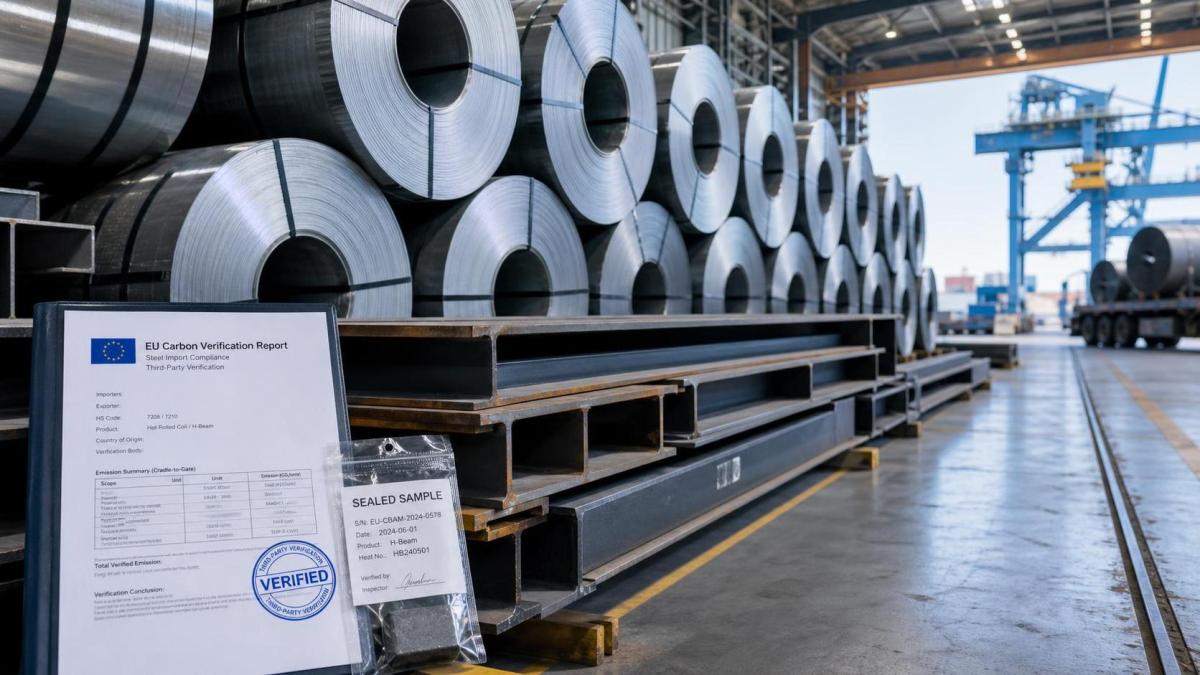
The confirmed change is that, from August 1, 2026, the CBAM transition period introduces compulsory quarterly reporting of embedded carbon emissions for imported basic steel products including hot-rolled coil and structural steel products, together with mandatory third-party verification.
The requirement applies to all third-country suppliers exporting steel to the European Union, including Chinese manufacturers. If an importer or supplier fails to submit an embedded emissions report that has been validated by a recognized body within the required timeframe, that failure may affect customs clearance and subsequent access under the formal stage of the mechanism.
The event also directly relates to how compliance responsibilities are allocated between overseas importers and suppliers, how early procurement documentation must be prepared, and how much coordination is required across the supply chain.
Where the Pressure Will Be Felt First
Export transactions are becoming more document-dependent
From an industry perspective, steel exporters serving the EU market are likely to feel the impact first because the rule change connects shipment continuity with verified emissions reporting rather than with commercial paperwork alone. The practical effect is likely to appear in export documentation workflows, internal data collection, and the timing of submissions required to support customs processing.
What deserves closer attention is whether exporters can organize product-level emissions information in a form that can be reviewed and validated in time for quarterly filing cycles. Even where production and delivery capacity remain unchanged, documentation readiness may become a separate constraint.
Importers and procurement teams face a sharper compliance interface
For overseas importers and buyers, the change matters because compliance responsibility can no longer be treated as an issue left entirely to the upstream mill or processor. The summary provided indicates that the rule directly affects how compliance obligations are shared, which means procurement teams may need to pay closer attention to supplier records, verification status, and the timing of supporting files before placing or confirming orders.
Analysis shows that the procurement function may be affected not only at contract stage but also in order scheduling and supplier qualification reviews, especially where delivery plans depend on uninterrupted customs handling.
Supply chain coordination costs may rise even without a change in product demand
Supply chain service providers, trading intermediaries, and firms coordinating cross-border delivery may also be affected because the new requirement introduces another formal checkpoint between production and market entry. The issue is not only whether steel can be shipped, but whether the emissions report has been prepared, verified, and aligned with the importer's filing cycle.
Observably, this can increase coordination demands between manufacturers, exporters, importers, and verification-related service parties, particularly where one shipment involves multiple internal handoff points or compressed lead times.
Operational Priorities Companies Should Review Now
Check whether emissions records are ready for quarterly filing
Analysis shows that companies linked to EU-bound steel shipments should first review whether their current data collection process can support quarterly declarations for embedded emissions. The key issue is not general sustainability messaging, but whether the required reporting files can be assembled in a repeatable and auditable way within the reporting schedule.
Reassess who is responsible for which compliance documents
Because the summary points directly to shared compliance responsibility between overseas importers and suppliers, companies should pay closer attention to how responsibilities are assigned across sales, export, procurement, and customer-facing teams. It is more appropriate to understand this as a contract and execution issue as much as a reporting issue, especially where customs handling may depend on timely submission.
Build more time into procurement and delivery planning
What deserves closer attention is the impact on procurement file preparation cycles. Where third-party verification is mandatory, businesses may need to allow more time between order confirmation, document preparation, verification, and shipment release. The input does not provide detailed execution timelines beyond the quarterly requirement, so this remains an area that companies should continue to monitor rather than assume is already standardized in practice.
Watch for changes in qualification and tender documentation
For suppliers competing for EU-related business, another practical point is whether buyers begin to adjust qualification reviews, tender files, or onboarding requirements to reflect verified embedded emissions reporting. The provided information does not confirm how market participants will revise those documents, but it strongly suggests that documentation standards in commercial transactions may tighten.
Why This Looks More Like an Execution Signal Than a Conceptual Policy Update
Analysis shows that this development is better understood as an execution-stage signal rather than a broad policy discussion. The shift to mandatory quarterly declarations and third-party verification indicates that carbon reporting for relevant steel imports is moving closer to operational enforcement and transaction-level compliance.
At the same time, it would be premature to treat every downstream effect as fixed. Observably, companies still need to follow how verification practice, document expectations, and market handling evolve in actual implementation. The rule change is real and immediate in principle, but some of the commercial and procedural consequences will still depend on how participants apply it in day-to-day trade.
How the Market Should Read This Development
On balance, this update should be read as a concrete compliance development for steel trade with the EU, especially for exporters of basic steel products and the import-side teams that rely on complete customs documentation. The most reasonable interpretation at this stage is that carbon reporting and third-party verification are becoming practical gatekeeping elements in cross-border steel transactions, rather than background transition-period formalities.
That does not by itself establish a final market outcome, and the input does not support broader claims about pricing, demand, or competitive winners and losers. What it does support is a clear signal that filing readiness, verification status, and supply chain coordination now deserve closer operational attention.
Basis of This Article and What Still Needs Verification
This article is based on the user-provided news title, event date, and event summary. For developments of this kind, relevant source categories usually include official announcements, releases from regulatory authorities, customs or trade administration information, industry association updates, standard-setting documents, and reporting from authoritative media.
No specific official source link was provided in the input, so the exact official publication path still needs to be verified on an ongoing basis. It remains necessary to continue checking later details such as implementing language, verification practice, filing expectations, tender document changes, industry feedback, and how companies are handling execution in actual trade flows.

By clicking 'Allow All', you agree to the storage of cookies on your device to enhance site navigation, analyze site usage and assist with our marketing efforts. Coo Cookie Notice
Please give us a message
SHANDONG LUBAO METAL GROUP CO., LTD.