


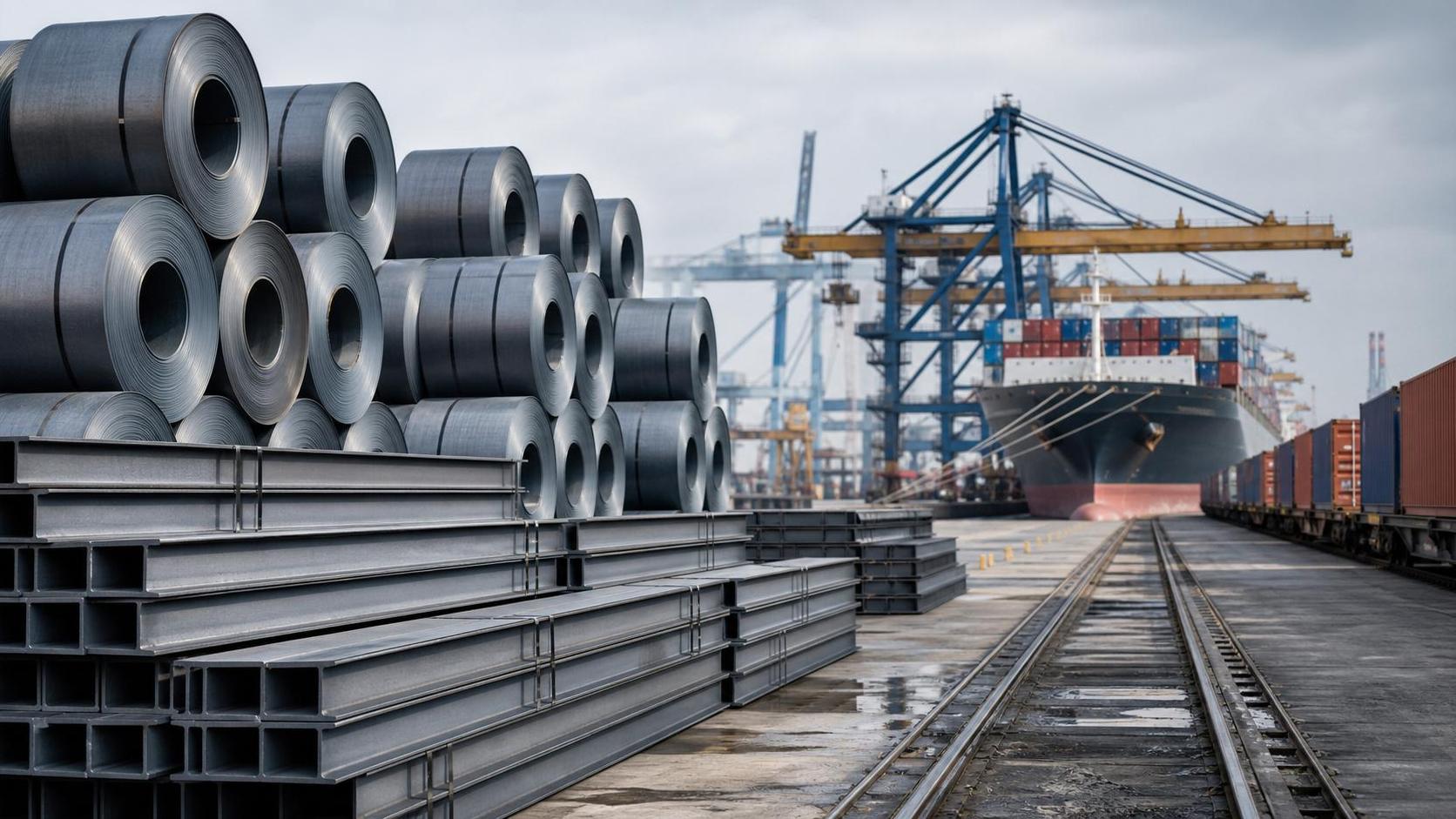
On July 5, 2026, the U.S. Department of Commerce announced an expedited sunset review of the anti-dumping duty order on hot-rolled coil (HRC) from China, a step that puts the future of these duties back into active review ahead of December 2026. For steel distributors, importers, supply chain service providers, and downstream manufacturers, this is not just a procedural update: it directly affects sourcing decisions, customs planning, and how companies assess exposure to China-origin steel in the U.S. market.

What the Commerce Department Has Put Under Review
The confirmed facts are limited but commercially significant. According to the July 5, 2026 announcement, the U.S. Department of Commerce, acting on an application from the domestic industry, formally initiated the first expedited sunset review of the anti-dumping duty order covering hot-rolled coil from China.
The review concerns the taxed period from 2021 to 2025. Its outcome will directly determine whether anti-dumping duties of up to 123.8% on Chinese HRC will continue from December 2026 onward. The development is relevant to global distributors, importers, and end manufacturers that rely on Chinese steel procurement or related customs arrangements.
Where the Immediate Pressure May Appear in the Supply Chain
Sourcing and import decisions face renewed uncertainty
From an industry perspective, companies directly involved in steel trade may be affected first because the review reopens a key policy variable tied to landed cost and import feasibility. The main impact is likely to appear in procurement timing, contract evaluation, and origin-based sourcing decisions. What deserves closer attention is whether firms continue to treat China-origin HRC as commercially workable under current and potential duty conditions.
Distributors and channel operators may need tighter inventory judgment
For distributors and channel businesses, the issue is less about a new duty being imposed today and more about how policy continuity risk shapes inventory planning and forward sales commitments. The practical concern is whether product mix, pricing assumptions, and customer quotations remain aligned with possible duty continuation after December 2026.
Manufacturers must watch cost pass-through and delivery coordination
Downstream manufacturers using hot-rolled coil may feel the impact through procurement cost visibility and shipment compliance rather than through policy language alone. Analysis shows that the key business link is the interface between sourcing strategy, customs handling, and production scheduling. Companies exposed to China-origin material may need to watch whether procurement plans and delivery commitments remain realistic under a continuing duty scenario.
Supply chain service providers face a documentation and clearance focus
For customs brokers, logistics coordinators, and related service providers, the development matters because trade remedy reviews often increase attention on origin, declarations, and timing. Observably, the relevant business pressure point is compliance execution: documentation accuracy, shipment sequencing, and communication with import-side clients become more sensitive when duty exposure remains under review.
What Companies Should Monitor Now
Follow official wording, not just market interpretation
Analysis shows that companies should distinguish between the launch of the review and the final duty outcome. The current development confirms that the review has started; it does not itself settle the result. Businesses should therefore monitor subsequent official statements closely rather than relying on assumptions drawn from market discussion.
Recheck exposure by product, contract, and shipment timeline
What deserves closer attention is how existing and planned business ties into the period leading up to December 2026. Importers, distributors, and manufacturers should review which purchase contracts, shipment schedules, and customer commitments could be affected if duties remain in force at current levels.
Strengthen document readiness for customs and client communication
Where procurement involves China-origin HRC, firms may need to confirm that origin records, transaction documents, and customs-facing materials are internally consistent. The same applies to customer-facing communication: sales and operations teams should be aligned on what is confirmed today and what remains subject to review.
Separate policy signals from operational decisions
From an industry perspective, the practical challenge is not only reading the review as a policy signal but translating it into workable supply chain decisions. Businesses should avoid treating the announcement as either a final resolution or a non-event. The more useful approach is to connect the review timeline with sourcing alternatives, delivery planning, and contingency preparation.
Why This Looks More Like a Signal Than a Final Outcome
Observably, this development is better understood as an active policy signal rather than a concluded trade outcome. The announcement matters because it keeps the anti-dumping framework on Chinese HRC in focus and places a clear decision point ahead of December 2026. At the same time, the confirmed information does not establish what the final determination will be.
Analysis shows that the market relevance comes from uncertainty management. For affected companies, the real issue is not merely whether duties exist today, but how to plan sourcing, compliance, and commercial commitments while a continuation decision is still pending. That is why this development deserves continued attention rather than a one-time reading.
How This Update Is Best Understood at This Stage
At this stage, the review should be read as a meaningful procedural development with direct commercial implications, especially for firms exposed to China-origin HRC in U.S.-linked trade flows. It is not yet a new final measure, but it is also not a routine detail that can be ignored. The more appropriate interpretation is that companies now have a defined policy process to watch, with potential consequences for procurement strategy, customs execution, and customer commitments from December 2026 onward.
Basis of This Article and Ongoing Verification
This article is based on the user-provided news title, event date, and event summary. For this type of development, relevant source categories typically include official government announcements, company disclosures, industry association updates, authoritative media reports, and trade or standards-related documents. A specific official source link was not provided in the input, so continued verification remains necessary. The main follow-up area to watch is any subsequent official wording related to the review process and the decision on whether the anti-dumping duties on Chinese HRC will continue from December 2026.

By clicking 'Allow All', you agree to the storage of cookies on your device to enhance site navigation, analyze site usage and assist with our marketing efforts. Coo Cookie Notice
Please give us a message
SHANDONG LUBAO METAL GROUP CO., LTD.