



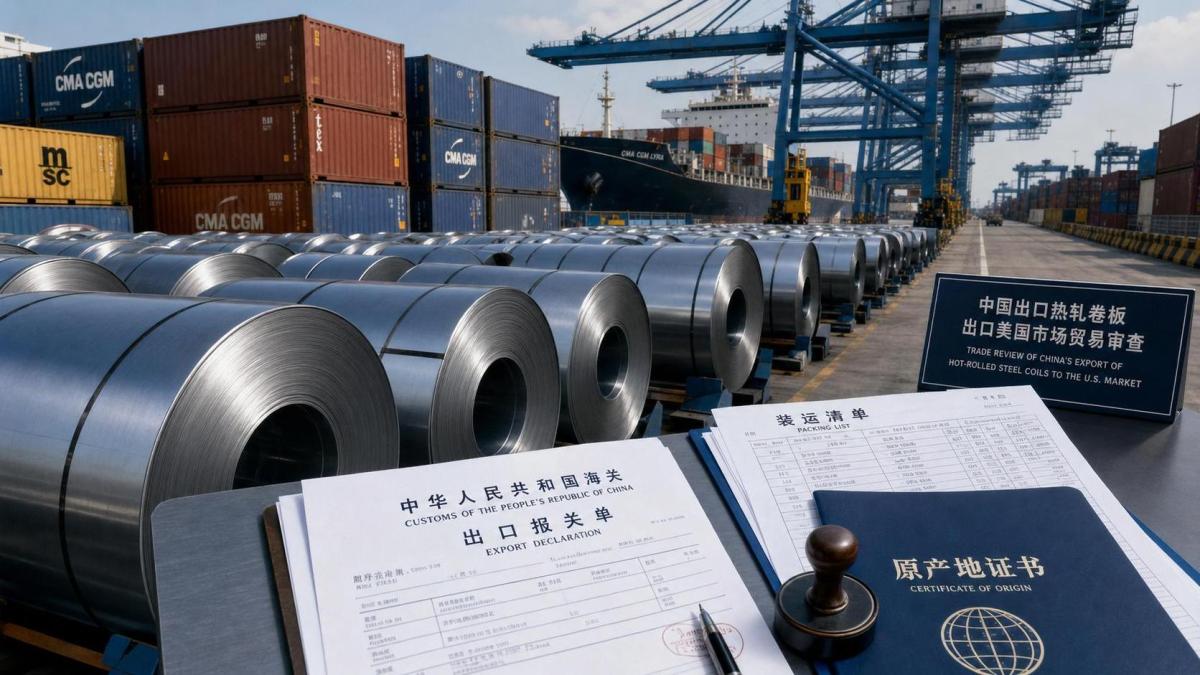
On June 27, 2026, the U.S. Department of Commerce announced an administrative review of antidumping measures on hot-rolled coil (HRC) originating in China, covering export shipments made from January 1 to December 31, 2025. For steel exporters, U.S. importers, overseas distributors, and downstream buyers, this is not just a procedural update: it directly affects the duty rates that may apply over the next 12 months, the level of customs documentation scrutiny, and the compliance costs attached to cross-border transactions.
What the Announcement Confirms
The confirmed facts are limited but commercially significant. The U.S. Department of Commerce issued the notice on June 27, 2026 and formally opened an antidumping administrative review concerning Chinese-origin HRC. The review period covers export batches shipped between January 1, 2025 and December 31, 2025.
According to the information provided, the review will directly influence the duty rate treatment applicable to exporters selling into the U.S. market over the coming 12 months. It will also affect customs clearance documentation requirements and the compliance cost burden borne by importers. For overseas distributors, importers, and end buyers, the immediate practical implications include longer procurement cycles, tighter document examination, and possible price transmission pressure.
Where the Pressure Is Likely to Appear First
Export transactions tied to the U.S. market
From an industry perspective, direct trade participants are likely to feel the effect first because duty rate application sits at the core of transaction pricing and delivery planning. Analysis shows that any review linked to prior shipment periods can shape current quoting discipline, contract timing, and internal document preparation for exporters serving the U.S. market.
Import operations and customs-facing workflows
Importers are exposed through compliance execution. The provided information already indicates stricter document review and higher compliance costs, which means the operational burden may concentrate in filing accuracy, supporting paperwork consistency, and customs clearance coordination. What deserves closer attention is whether internal review cycles become longer as counterparties seek to reduce procedural risk.
Distribution channels and inventory planning
Overseas distributors may be affected less by the announcement itself than by the timing effects it introduces. Observably, when procurement cycles lengthen and documentation thresholds tighten, channel operators may need to reassess inventory pacing, order sequencing, and customer delivery expectations. The main issue here is not a confirmed market outcome, but the increased need for scheduling flexibility.
Downstream buyers facing cost pass-through risk
End buyers are mentioned in the source information as potential recipients of price pressure. Analysis shows that the concern is not only the headline duty treatment, but also the indirect cost build-up from documentation control, clearance timing, and importer-side compliance work. For purchasing teams, this creates a need to watch landed cost assumptions more closely.
What Companies Should Watch Now
Further official wording and procedural updates
Companies with exposure to HRC trade into the U.S. should closely monitor subsequent official language tied to this review. The immediate announcement confirms the launch of the process, but the practical business impact often depends on how later procedural requirements are expressed and applied in transaction handling.
Shipment records and document consistency
Because the review covers exports made during calendar year 2025, businesses should pay particular attention to the completeness and consistency of shipment-related records tied to that period. From a practical standpoint, documentation discipline becomes a commercial issue when customs scrutiny increases and importer compliance costs rise.
Contract timing, delivery expectations, and buyer communication
What deserves closer attention is the gap between a policy action and its operational effect. Even where no immediate shipment disruption is confirmed, longer procurement cycles and stricter document review can affect promised lead times. Exporters, importers, and distributors should therefore align customer communication with a more cautious delivery and clearance timeline.
Supplier qualification and contingency preparation
For companies managing multi-party supply chains, the current development raises the importance of checking supplier documentation readiness, transaction traceability, and fallback arrangements for orders exposed to U.S. entry procedures. This is less about assuming a fixed outcome and more about reducing avoidable friction in execution.
How This Development Should Be Read
Analysis shows that this announcement should not be treated as a final market result in itself. It is more appropriate to understand this as an active procedural step with direct commercial consequences, especially for tax rate application, customs paperwork, and transaction timing over the next 12 months.
Observably, the industry needs to keep watching because the notice carries both short-term and extended significance. In the short term, it affects process management and trading discipline. As a broader signal, it indicates that market participants tied to Chinese HRC exports to the U.S. should continue to treat compliance, records, and buyer communication as live operational priorities rather than background tasks.
Why This Matters Beyond the Initial Notice
The significance of this update lies in its immediate business relevance. It touches pricing, customs handling, procurement lead times, and the allocation of compliance effort across exporters, importers, distributors, and downstream buyers. Current conditions do not support a definitive conclusion on the full commercial outcome, but they do justify closer monitoring and more disciplined transaction preparation.
It is more appropriate to understand this development as a meaningful near-term operational change and an industry signal that still requires continued observation, rather than as a settled end result.
Basis of This Article and Ongoing Verification
This article is based on the user-provided news title, event date, and event summary regarding the U.S. Department of Commerce administrative review on Chinese-origin hot-rolled coil. In reporting of this type, relevant source categories commonly include official government notices, company disclosures, industry association updates, authoritative media reporting, and standard-setting or trade-related documents.
A specific official source link was not provided in the input, so the exact original notice link remains to be verified on an ongoing basis. Areas that still deserve continued attention include any follow-up official wording, procedural clarification, and how the review translates into actual documentation, clearance, and cost practices in business operations.

By clicking 'Allow All', you agree to the storage of cookies on your device to enhance site navigation, analyze site usage and assist with our marketing efforts. Coo Cookie Notice
Please give us a message
SHANDONG LUBAO METAL GROUP CO., LTD.