



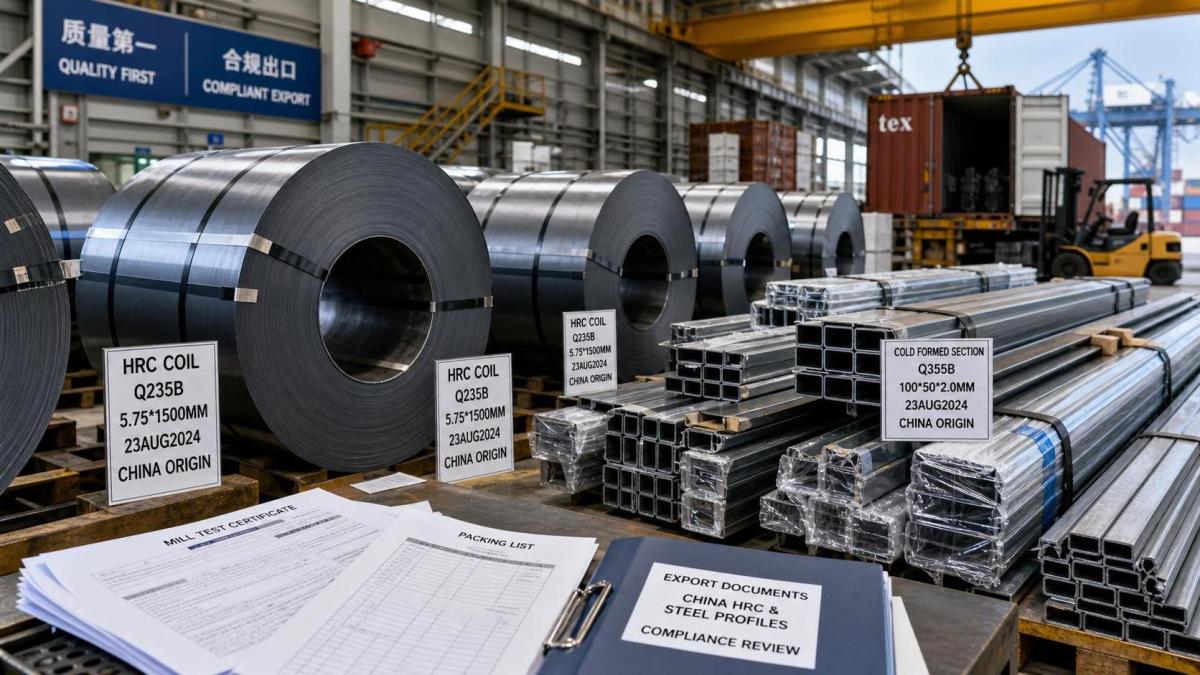
On July 1, 2026, the U.S. Department of Commerce formally opened an annual administrative review of the anti-dumping duty order on hot-rolled coil (HRC) from China, covering exports shipped between April 1, 2025 and March 31, 2026. For the market, this is not only a review of HRC itself. It also matters for exporters, importers, distributors, and processors involved in cold-formed sections, structural profiles, and other downstream products made from hot-rolled coil, because pricing, origin documentation, and tariff classification compliance may all come under closer operational pressure within a short filing window.
What Has Been Confirmed So Far
The confirmed facts are limited but commercially significant. The review was initiated by the U.S. Department of Commerce on July 1, 2026, and it applies to the anti-dumping duty order on HRC originating in China. The period under review covers exports from April 1, 2025 to March 31, 2026.
The information provided also confirms that exporters are required to submit a complete response by July 22. In addition, the review is expected to directly affect export pricing, certificates of origin, and tariff classification compliance for downstream products that use hot-rolled coil as an input, including cold-formed steel sections and structural profiles. Overseas importers and distributors are also expected to update their supplier compliance assessment processes.
Where the Immediate Pressure May Appear
Export transactions tied to HRC-based products
From an industry perspective, exporters dealing in products made from hot-rolled coil may face pressure first in transaction execution rather than only at the policy level. The reason is clear from the confirmed information: the review reaches beyond raw material sensitivity and touches pricing, origin proof, and tariff classification. For companies shipping cold-formed sections or structural profiles, the main area to watch is whether existing export documentation and product descriptions are fully consistent with the materials used and the declared customs treatment.
Processing manufacturers using hot-rolled coil as input
Analysis shows that manufacturers converting HRC into downstream steel profiles may need to pay closer attention to how product transformation is documented in practice. The review itself does not automatically redefine every downstream product, but it does raise the compliance stakes around how these goods are priced, described, and supported by origin-related documents. The operational impact may therefore appear in internal record preparation, shipment files, and coordination between production, sales, and trade compliance teams.
Importers and distributors in overseas markets
Observably, the notice also matters for buyers outside China, especially importers and distributors that maintain approved supplier systems. The confirmed information states that these parties need to update supplier compliance assessment procedures. In practical terms, the issue is not only supplier availability, but also whether supplier files, customs documentation, and product classification support remain adequate during the review process.
Supply chain and trade service participants
For service providers involved in customs, logistics, documentation, or trade support, the main exposure is process-related. What deserves closer attention is the possibility that clients will need faster document checks, clearer classification support, and tighter coordination across shipment records, origin papers, and product specifications before filings are completed and future transactions proceed.
What Companies Should Be Tracking Now
The filing deadline and response completeness
The most immediate practical point is the July 22 deadline for a complete response. Companies affected by the review should distinguish between knowing that a review has started and being operationally ready to answer it. In this case, response completeness is part of the confirmed requirement, so document readiness and internal coordination deserve immediate attention.
Consistency between pricing, product description, and customs treatment
Analysis shows that one of the central business issues is alignment. Export pricing, origin documentation, and tariff classification are all named in the provided information, which means firms should pay attention to whether commercial invoices, product specifications, customs declarations, and origin-related materials tell a consistent story for HRC-based downstream goods.
Communication with overseas buyers and channel partners
What deserves closer attention is the buyer-facing side of compliance. Since overseas importers and distributors are expected to revise supplier assessment procedures, exporters may need to prepare for additional requests for qualification materials, product breakdowns, and supporting documents. This is less about marketing communication and more about maintaining continuity in routine trade relationships.
Product scope and shipment-by-shipment review discipline
Observably, companies should avoid treating all steel exports as affected in the same way. The confirmed information points specifically to downstream goods made from HRC, such as cold-formed sections and structural profiles. That makes product-level review important: businesses should focus on the shipments, categories, and records that fall within the stated review period and have direct material linkage to HRC.
How This Development Is Best Understood at This Stage
Analysis shows that this development is best read as an active compliance event rather than a final market outcome. The confirmed facts establish that a formal review has started and that exporters face a near-term response deadline. They do not, by themselves, confirm any final adjustment in treatment or outcome. For that reason, it is more appropriate to understand this as a near-term operational signal with broader implications for documentation quality, supplier review discipline, and transaction-level compliance.
From an industry perspective, continued attention is warranted because the notice reaches across several points in the steel export chain at once: raw material linkage, downstream product handling, customs classification, and buyer-side supplier controls. That combination makes the issue relevant even for firms that do not view themselves as direct HRC sellers.
Why the Market Should Keep Watching
The current significance of this review lies in its immediate effect on compliance preparation and commercial coordination. It does not yet amount to a confirmed long-term result, but it clearly signals that companies tied to HRC-based export flows should check whether their pricing files, origin support, and classification logic can withstand closer scrutiny. At this stage, it is more appropriate to view the development as a short-term compliance trigger with possible wider implications that still require observation.
Basis of This Article
This article is based on the user-provided news title, event date, and event summary concerning the July 1, 2026 initiation by the U.S. Department of Commerce of an annual administrative review of the anti-dumping duty order on HRC from China.
For this type of industry update, commonly relevant source categories may include official government notices, company disclosures, trade association updates, authoritative media reporting, and standards or customs-related documentation. A specific official source link was not provided in the input, so the exact document path still requires ongoing verification. Continued follow-up should focus on any subsequent official wording, filing-related updates, and changes in how affected parties handle origin documentation, tariff classification, and supplier compliance review.

By clicking 'Allow All', you agree to the storage of cookies on your device to enhance site navigation, analyze site usage and assist with our marketing efforts. Coo Cookie Notice
Please give us a message
SHANDONG LUBAO METAL GROUP CO., LTD.