



On July 9, 2026, the U.S. Department of Commerce announced the first expedited sunset review of the antidumping duty order on hot-rolled steel sheet products from China. For exporters, import-side buyers, processors, and supply chain service providers tied to HRSS trade, this is not just a procedural update. It signals a new review stage that could shape duty continuity, customs cost expectations, and delivery planning for shipments connected to the U.S. market over the next five years, with the result expected in January 2027.
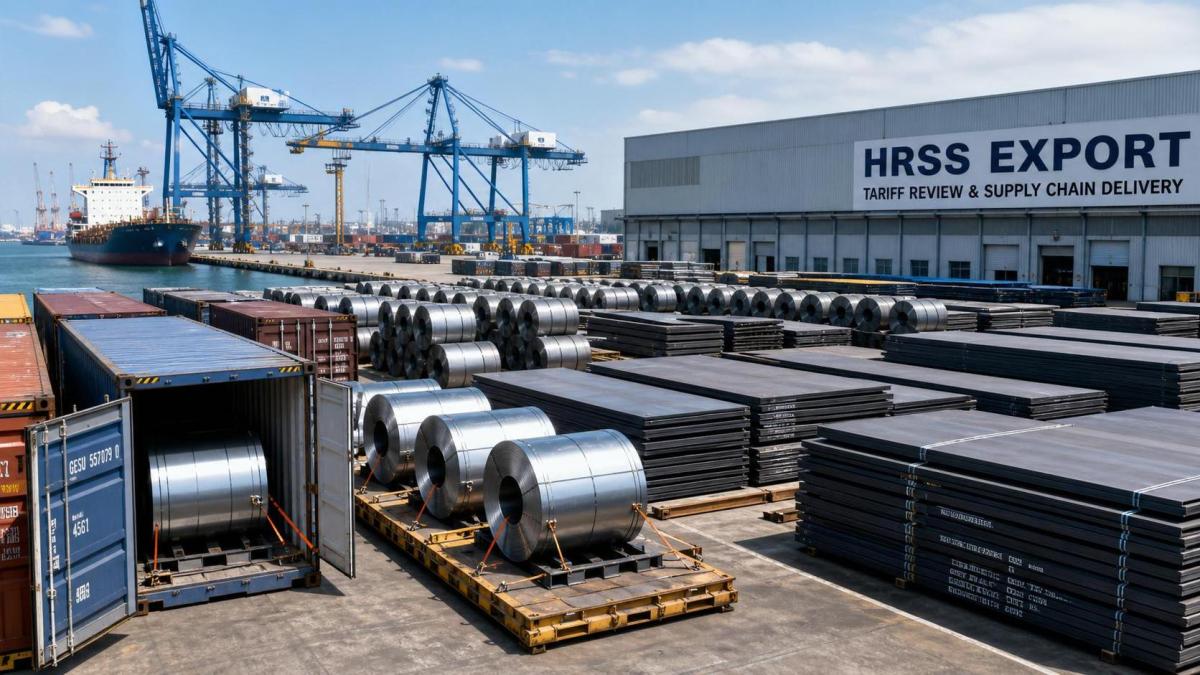
A review stage with direct trade relevance
The confirmed facts are limited but commercially meaningful. The U.S. Department of Commerce formally initiated the first expedited sunset review on July 9, 2026, covering the antidumping duty order on hot-rolled steel sheet products, or HRSS, originating in China. According to the event summary provided, the review will assess whether continuing the duty is likely to cause material injury to the U.S. domestic industry. The outcome is expected in January 2027 and is described as having a direct bearing on compliance routes, customs costs, and order delivery stability for exports of HRSS to the United States during the following five years.
Where the pressure may appear along the chain
Export transactions may face a longer compliance horizon
From an industry perspective, exporters connected to U.S.-bound HRSS business may be affected because the review keeps the duty framework under active regulatory examination. The practical impact is likely to center on trade compliance review, shipment planning, customs preparation, and customer communication. What deserves closer attention is whether internal documentation, product descriptions, and transaction records are organized well enough to support stable order execution while the review remains in focus.
Procurement and manufacturing plans may need tighter timing control
For raw material buyers and processing manufacturers, the issue is less about immediate rule finality and more about planning risk. Analysis shows that when a trade remedy review remains unresolved, procurement scheduling, production sequencing, and delivery commitments linked to the U.S. market may require more caution. Businesses with orders tied to future U.S. delivery windows may need to watch for how customs cost expectations and lead-time assumptions are reflected in contracts and operational planning.
Distributors and service providers may see more emphasis on execution detail
Channel distributors, logistics coordinators, customs-facing service providers, and related supply chain participants may be affected because changes in duty continuity expectations can influence landed cost calculations and delivery reliability. Observably, these roles should pay particular attention to shipment documentation, declaration consistency, order timing, and communication around possible cost or schedule adjustments. The event summary does not provide new operational rules, but it clearly points to greater sensitivity around trade execution.
What companies should watch before the result is published
Keep compliance files ready for a longer review window
Analysis shows that firms involved in HRSS trade should treat this period as one requiring cleaner compliance preparation rather than assuming a settled outcome. Product records, transaction documents, technical descriptions, and customs-related files may become more important for internal review and external coordination, especially where U.S.-bound business depends on predictable clearance and delivery.
Track official wording and any later implementation signals
What deserves closer attention is not only the launch of the review itself, but also any later official wording that may clarify scope, interpretation, or execution expectations. Since the input does not provide detailed implementation measures, it is more appropriate to regard this stage as a rule-related development that still requires monitoring rather than a completed enforcement result.
Recheck contracts, quotations, and delivery commitments
For commercial teams, the review period may justify a fresh look at cost assumptions, quotation validity periods, delivery clauses, and customer communication procedures for U.S.-related business. Analysis shows that where customs cost exposure and order stability are both in play, even unchanged physical production can still face commercial execution pressure.
Watch documents used in tenders and customer qualification
If a company participates in bid-based supply or customer qualification processes, it may be prudent to review whether trade status, supporting technical documents, and supplier qualification files are aligned with the latest regulatory context. The current information does not establish a new mandatory documentation rule, but it does indicate that documentation discipline may matter more while the review is pending.
Why this should be read as a live regulatory signal
Observably, this development is better understood as an active trade-rule signal than as a final market outcome. The review has started, the policy question is clearly defined, and the expected decision timing gives the market a visible observation window. At the same time, the provided information does not confirm the final direction of the review. From an industry perspective, that means companies should focus on monitoring regulatory expression, customer-side reactions, and practical execution changes instead of treating the matter as already resolved.
How to frame the current stage
The immediate significance of this event lies in its effect on planning discipline. It highlights that U.S.-related HRSS business involving China-origin products remains exposed to a rule process that can affect compliance paths, customs cost expectations, and delivery confidence over a multi-year horizon. Analysis shows that the most reasonable reading today is that this is a consequential review milestone with real operational relevance, but not yet a concluded rule outcome.
Basis of this article and what still needs verification
This article is generated based on the user-provided news title, event date, and event summary. For events of this type, relevant source categories commonly include official notices, releases from regulatory authorities, customs or trade administration information, industry association updates, standards-related documents, and reporting by authoritative media. No specific official source link was provided in the input, so the exact official reference still needs to be verified on an ongoing basis. Further observation is also needed regarding later policy detail, implementation wording, tender document changes, industry feedback, and how affected companies adjust execution in practice.

By clicking 'Allow All', you agree to the storage of cookies on your device to enhance site navigation, analyze site usage and assist with our marketing efforts. Coo Cookie Notice
Please give us a message
SHANDONG LUBAO METAL GROUP CO., LTD.