


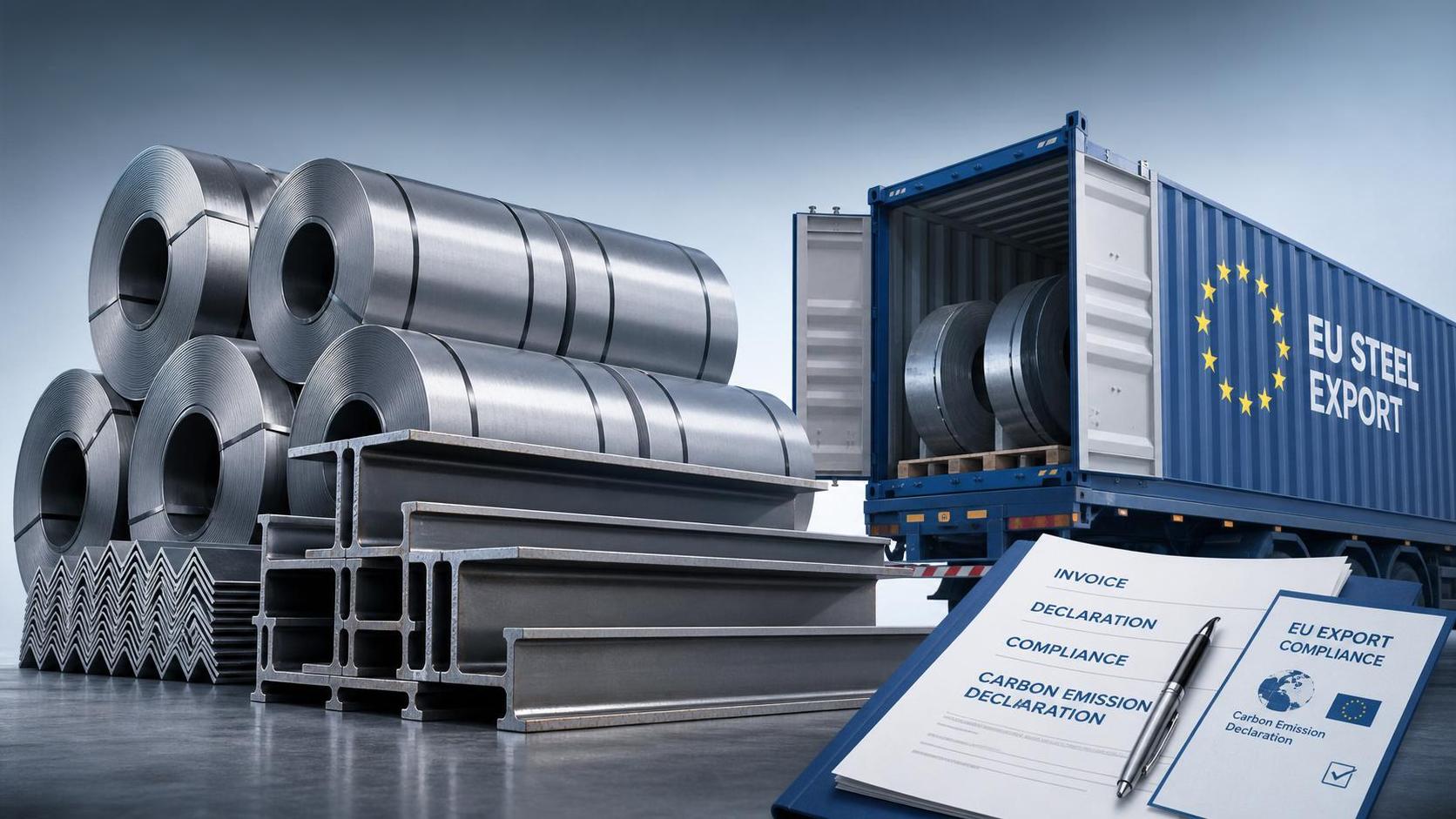
On July 2, 2026, the European Commission released a transition-period implementation guide for CBAM covering steel products, setting a clearer compliance path for steel shipments entering the EU. For exporters of hot-rolled coil, H-beams, angle steel and similar sections, the change matters because quarterly embedded carbon emissions data will need to be filed through the CBAM portal from October 1, 2026, with review by EU-authorized verification bodies. That makes the issue relevant not only to exporters, but also to teams handling documentation, customs clearance, delivery scheduling and supply chain coordination.
What the new transition guide confirms
The confirmed facts are limited but operationally important. The European Commission formally issued the “Carbon Border Adjustment Mechanism (CBAM) Steel Products Transition Period Implementation Guide” on July 2, 2026. According to the user-provided event summary, from October 1, 2026, all hot-rolled coil, H-beams, angle steel and other steel sections exported to the EU must submit quarterly embedded carbon emissions data through the CBAM portal. The same summary states that these filings will be subject to review by EU-authorized verification bodies. The stated direct impact is on the compliance preparation cycle and customs clearance timing of Chinese steel exporters, while non-compliant shipments may face delayed release or added evidence-submission costs.
Where the pressure is likely to appear first
Export execution shifts from shipment-only to filing readiness
From an industry perspective, exporters are the first group affected because the rule change ties market access more closely to emissions reporting readiness. The main impact is likely to appear in pre-shipment document preparation, internal data collection and coordination with verification-related processes. What deserves closer attention is whether export teams can align quarterly reporting obligations with shipment schedules and customs documentation without creating delays at the point of clearance.
Processing and manufacturing links face documentation exposure
Processing and manufacturing companies connected to EU-bound steel products may also feel the effect because emissions-related information now has a more direct role in export compliance. The practical issue is not only production, but whether supporting records can be organized in a way that serves quarterly CBAM reporting and external review. Analysis shows that this raises the importance of traceable technical and compliance documentation within the supply chain, even where the exporter is the party filing through the portal.
Supply chain and delivery teams may need tighter coordination
Supply chain service providers and delivery planners may be affected because customs timing can be influenced by whether CBAM-related submissions and review steps are in order. The operational risk described in the event summary is not a change in product demand, but added friction in release timing and evidence preparation when requirements are not met. For that reason, contract execution, lead-time management and shipment sequencing may require closer coordination with compliance teams than before.
Buyers and channel partners may pay more attention to file completeness
Purchasing parties and distribution channels linked to EU deliveries may also need to monitor whether suppliers can support the required reporting flow. Observably, the rule change brings compliance capacity closer to a commercial consideration, because missing or incomplete emissions data could affect delivery reliability or raise follow-up documentation costs. That does not confirm a market outcome, but it does suggest that supporting materials and supplier readiness may receive more scrutiny in transactions tied to EU delivery.
What companies should watch in the coming months
Prepare emissions data workflows before the filing start date
Analysis shows that the most immediate task is not broad strategy but workflow readiness. Companies involved in EU-bound steel sections should review whether they can gather, organize and submit quarterly embedded carbon emissions data in a timely way through the CBAM portal once the October 1, 2026 requirement takes effect.
Track how verification affects document timing
The event summary confirms review by EU-authorized verification bodies, which means companies should pay attention to how verification interacts with filing timetables and shipment plans. Since the detailed operating rhythm is not provided in the input, it is more appropriate to understand this as a compliance checkpoint that requires ongoing attention rather than a fully defined execution sequence.
Recheck trade documents and delivery commitments
What deserves closer attention is the linkage between emissions filings and normal export paperwork. Businesses may need to examine whether contract terms, clearance planning, supporting records and customer delivery commitments leave enough room for CBAM-related submission and review steps. The input does not provide detailed procedural rules, so this remains a practical area for monitoring rather than a confirmed finished requirement set.
Monitor follow-on wording and implementation signals
Observably, the publication of a transition-period guide is a concrete rule-development signal, but not every execution detail is visible in the information provided here. Companies should therefore continue watching for later official wording, implementation clarifications, verification practice, document expectations and market-side responses that may affect day-to-day handling.
How this development is best understood now
Analysis shows that this update is more than a general policy headline because it introduces a defined reporting obligation, a filing channel and a verification element tied to EU-bound steel products. At the same time, it should not be overstated as a fully settled end-state for execution. It is more appropriate to understand this as a landed compliance signal with immediate operational relevance, while some practical interpretation still needs continued observation through implementation.
Why the market will read this as an execution signal
For the steel trade, the significance of this development lies in timing and process discipline. The guide points to a compliance requirement that reaches into filing preparation, verification coordination and customs handling, rather than remaining at the level of policy language alone. A neutral reading is that the rule change already deserves action from affected businesses, especially those serving EU-bound steel sections, while final market effects and on-the-ground handling practices still need to be observed.
Basis of this article and points for continued verification
This article is generated from the user-provided news title, event date and event summary. For developments of this type, relevant source categories often include official announcements, releases from regulatory authorities, customs or trade-administration information, industry association notices, standard-setting documents and reporting by established trade media. A specific official source link was not provided in the input, so the exact source document path still needs to be verified on an ongoing basis. Follow-up attention should remain on detailed policy wording, verification practice, implementation interpretation, tender-document changes, industry feedback and how affected companies execute the requirement in practice.

By clicking 'Allow All', you agree to the storage of cookies on your device to enhance site navigation, analyze site usage and assist with our marketing efforts. Coo Cookie Notice
Please give us a message
SHANDONG LUBAO METAL GROUP CO., LTD.