



On July 3, 2026, the U.S. Department of Commerce formally opened an annual administrative review of the antidumping duty order covering galvanized steel sheets from China. The move stands out because three Chinese producers with notably rising recent export volumes to the U.S. have been added to the mandatory respondent list, making this a development that deserves close attention from exporters, U.S. importers, procurement teams, and supply chain service providers watching customs timing, cash-flow exposure, and contract execution over the next 6 to 12 months.
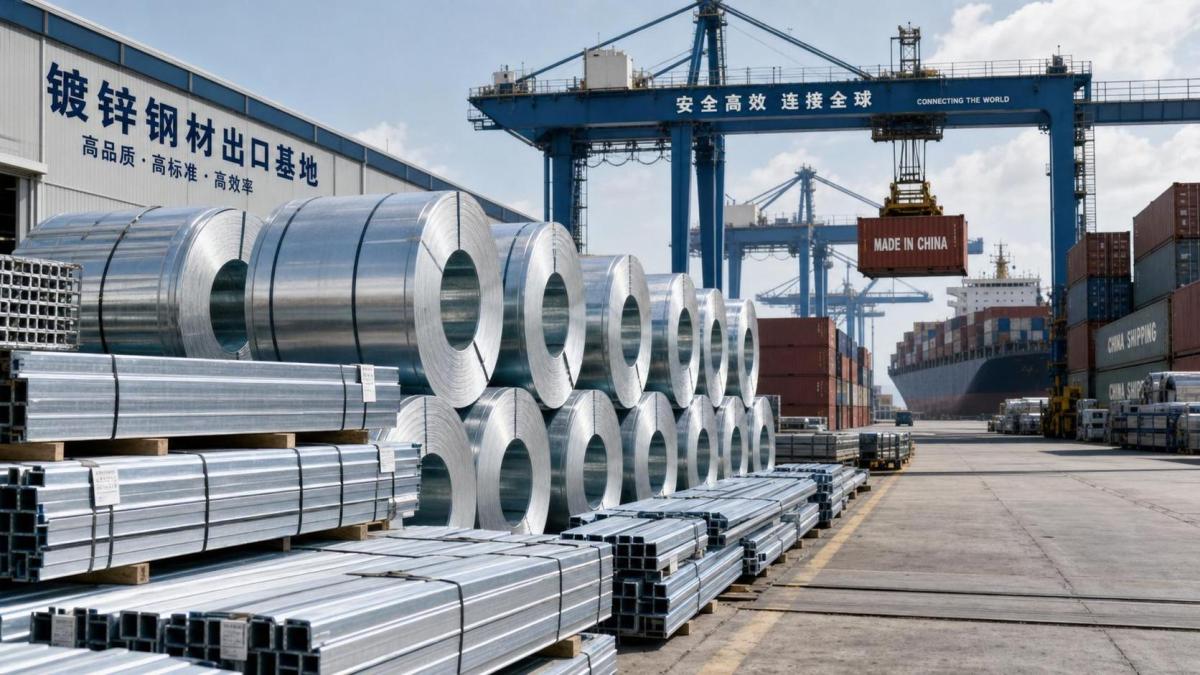
What the DOC Has Confirmed
According to the information provided, the review was officially initiated by the U.S. Department of Commerce on July 3, 2026, and applies to galvanized steel sheets originating in China. The proceeding is an annual administrative review under the existing antidumping duty order. The same notice also brings three Chinese producers of sections and coated steel sheets into the scope of mandatory response requirements, with the summary noting that these companies had seen significant growth in exports to the U.S. in recent years.
The information provided further states that the review is expected to directly affect customs clearance timing, cash deposit levels, and the final duty rate determination for the companies involved over the coming 6 to 12 months. It also indicates that importers need to update supplier compliance assessments and procurement contract terms accordingly.
Where the Pressure May Appear Along the Trade Chain
Export-side compliance and shipment planning
From an industry perspective, Chinese exporters shipping galvanized steel sheets to the U.S. may face the most immediate pressure in documentation, response preparation, and shipment scheduling. The reason is straightforward: once a company is included in a review, operational attention typically shifts toward the timing and completeness of records tied to U.S. exports. What deserves closer attention is whether current orders, customs documentation, and internal trade records can support smoother clearance while the review remains active.
Importer risk control and contract management
U.S. importers may be affected through landed-cost planning, supplier screening, and contract execution. Based on the provided summary, the review may influence both cash deposit ratios and final duty outcomes, which means buyers need to look carefully at how pricing terms, liability allocation, and review-related contingencies are written into procurement agreements. The practical issue is less about headline policy language and more about who bears timing risk and cost adjustments if review outcomes move against expectations.
Supply chain service providers and customs coordination
Customs brokers, logistics providers, and other trade service participants may also feel the impact through documentation checks, filing accuracy, and schedule reliability. Analysis shows that when a trade remedy review directly affects clearance timing, service providers need to pay closer attention to product classification, shipment files, and communication between exporter and importer. Even without a final rate outcome yet, the procedural stage itself can raise the importance of execution discipline.
Downstream buyers using coated steel inputs
Manufacturers and procurement teams that rely on galvanized steel sheet supply for ongoing production may not be the direct target of the review, but they could still be affected through delivery timing and supplier stability. Observably, the issue for downstream users is not only pricing; it is also whether existing suppliers can continue to support predictable lead times and compliant U.S.-bound transactions during the review period.
What Companies Should Watch Now
Follow official wording, not market paraphrases
Analysis shows that the most immediate task is to track official DOC language and procedural updates closely. In trade remedy matters, small differences in scope, respondent status, and filing requirements can have material business consequences. Companies should avoid treating secondary market interpretations as a substitute for formal notices.
Separate procedural risk from final commercial impact
What deserves closer attention is the distinction between the launch of a review and the final commercial result. The confirmed fact is that the review has started and that three additional Chinese exporters are now in the mandatory respondent group. That does not by itself determine the final duty outcome, but it does create a period in which clearance timing, deposit exposure, and transaction planning may become more sensitive.
Recheck supplier files and transaction documentation
For importers and exporters already active in this trade lane, supplier qualification files, product records, customs documents, and shipment histories should be reviewed with more discipline. The reason is practical: if customs timing and final rate determination are likely to be affected, documentation quality becomes part of delivery reliability and cost control, not just a compliance formality.
Update contract language around timing and duty exposure
The provided summary specifically points to the need for importers to update supplier compliance assessments and procurement contract terms. In practice, that means reviewing how contracts handle duty-related uncertainty, review-period timing, supporting documents, and communication obligations between counterparties. For ongoing business, this may matter as much as price itself.
How This Development Is Best Understood
Observably, this is better understood as a live procedural development with clear near-term operational implications rather than a settled outcome. The review has been initiated, and the expansion of the mandatory respondent list signals closer scrutiny of exporters whose U.S. shipment volumes have grown. Analysis shows that the significance lies in process and exposure management: the event does not yet establish a final commercial conclusion, but it does raise the importance of compliance readiness and contract discipline across the supply chain.
It is also more appropriate to understand this as a signal worth continued monitoring, not as a one-day headline that can be filed away. The next phase matters because the impact described in the provided information centers on future clearance efficiency, deposit levels, and final rate determination, all of which unfold over time rather than at the moment of announcement.
Why the Market Should Keep This in View
For the galvanized steel sheet trade, the immediate importance of this announcement is not only that a review has begun, but that the respondent scope now includes three additional Chinese exporters with rising U.S. shipment activity. That combination makes the event relevant to trade execution, supplier risk review, and procurement planning over the coming months.
At this stage, the most balanced reading is that the market is looking at a short- to medium-term operating issue with possible longer-tail implications, depending on how the review develops. The prudent takeaway is to treat the announcement as an active compliance and transaction management issue, while continuing to watch for official procedural updates before drawing firmer conclusions.
Basis of This Article and What Still Needs Verification
This article is based on the user-provided news title, event date, and event summary. For developments of this kind, commonly relevant source types include official government notices, company disclosures, industry association updates, authoritative media reporting, and trade or standards-related documentation.
No specific official source link was provided in the input, so the precise original notice and any subsequent procedural documents still need to be continuously verified. The main areas for follow-up are future official wording from the DOC, any updates affecting respondent treatment, and any later clarification relevant to customs timing, cash deposit levels, and final duty rate determination.

By clicking 'Allow All', you agree to the storage of cookies on your device to enhance site navigation, analyze site usage and assist with our marketing efforts. Coo Cookie Notice
Please give us a message
SHANDONG LUBAO METAL GROUP CO., LTD.