


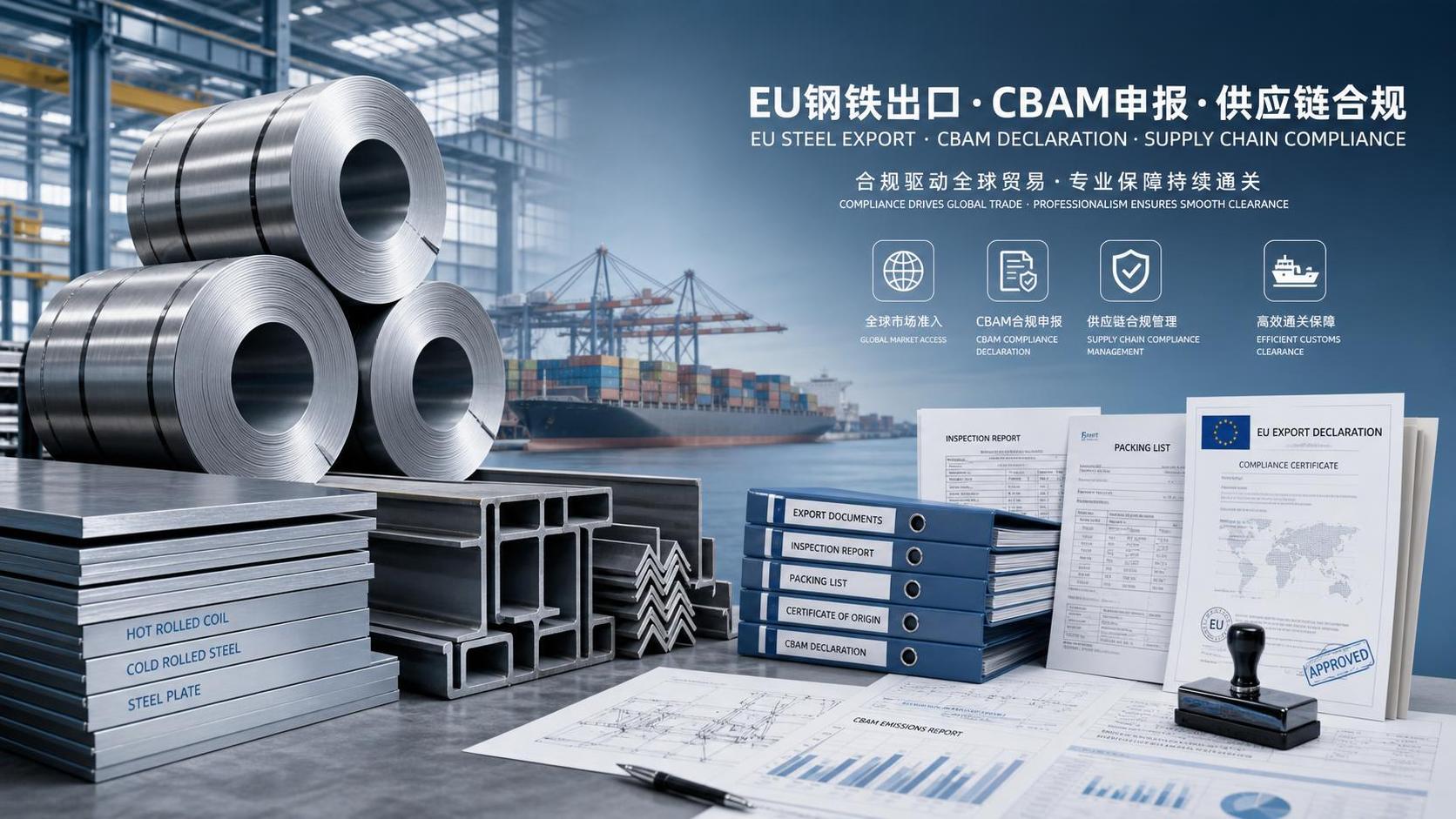
On July 22, 2026, the European Commission moved the CBAM transitional period for steel products into its third stage, extending reporting coverage to all steel products and sections exported to the EU, including hot-rolled coil, cold-rolled sheet, H-beams, angle steel, and channel steel. For exporters, processors, traders, and supply-chain teams serving EU-bound orders, the change matters because carbon reporting is no longer limited to a narrower product scope and now becomes a more direct operational requirement tied to customs handling, documentation readiness, and shipment continuity.
What Has Formally Changed in This Stage
According to the provided event information, the third stage of the EU CBAM transitional period took effect on July 22, 2026. From that date, all steel products and sections exported to the EU were brought into the reporting scope for the first time, including products such as hot-rolled coil, cold-rolled sheet, H-beams, angle steel, and channel steel.
The same information states that exporting companies are required to submit embedded carbon emissions data to the EU MRV system on a quarterly basis. The reported data must also be subject to third-party verification.
The provided summary further states that non-compliant reporting may lead to customs clearance delays or a requirement to provide additional guarantees.
Where the Pressure Will Appear Across the Steel Trade Chain
Export-facing suppliers will face a broader reporting burden
From an industry perspective, exporters are the first group directly exposed to this rule change because the reporting scope now covers all steel products and sections shipped to the EU within the categories described in the event summary. The immediate impact is likely to fall on product classification, emissions data collection, quarterly reporting preparation, and coordination with third-party verification parties. What deserves closer attention is whether existing shipment files, product records, and internal carbon data trails are complete enough to support repeated submissions rather than one-off declarations.
Manufacturing and processing links will need more consistent source data
Analysis shows that mills and downstream processors involved in EU-bound material may feel the impact even when they are not the final exporter of record. If quarterly submission and third-party verification are required, upstream production and processing stages are more likely to be asked for emissions-related data, technical records, and product-level supporting documents. The practical issue is not only whether data exists, but whether it can be organized in a format that downstream exporters can actually use in time for reporting.
Traders and channel operators may need tighter document control
For trading companies and distribution intermediaries, the rule change may affect handover points in the sales and delivery process. Observably, the more intermediated the transaction chain is, the more sensitive it becomes to missing emissions information, incomplete product documentation, or unclear responsibility for quarterly filing support. In commercial practice, this can affect contract review, document requests to suppliers, and shipment scheduling for EU orders.
Supply-chain and customs coordination becomes more exposed to compliance timing
Supply-chain service providers, including teams involved in export documentation and customs coordination, may also be affected because the event summary explicitly links non-compliant reporting to possible customs delays or additional guarantees. That means reporting readiness is no longer only a sustainability or regulatory matter; it can also affect delivery timing, border procedures, and transaction predictability.
What Companies Should Watch More Closely Now
Check whether all EU-bound steel categories are now within internal reporting scope
Analysis shows that companies should first review whether their internal product scope matches the expanded coverage described in the event summary. This is especially relevant for businesses shipping multiple forms of steel, because products such as hot-rolled coil, cold-rolled sheet, H-beams, angle steel, and channel steel are specifically referenced in the provided information.
Prepare quarterly reporting records around embedded emissions data
What deserves closer attention is the operational rhythm created by quarterly submission to the EU MRV system. Companies involved in EU exports may need to confirm whether internal records, supplier inputs, and product-level files can support recurring reporting cycles rather than ad hoc compliance responses. The event summary confirms the reporting requirement, but does not provide detailed filing methodology, so firms should treat process readiness as a current priority area for monitoring and preparation.
Assess readiness for third-party verification
Observably, third-party verification changes the burden from simple data collection to data defensibility. Businesses should pay attention to whether their technical documents, traceability records, and emissions-related supporting materials can be reviewed in a way that is consistent and repeatable. Because the input does not provide further procedural detail, this should be understood as a practical compliance focus rather than a confirmed final execution model.
Review delivery risk where customs timing matters
From an industry perspective, the reference to possible customs clearance delays or additional guarantees means companies should also examine delivery-sensitive orders, customer commitments, and shipment planning for EU destinations. The immediate question is less about a long-term market outcome and more about whether reporting gaps could disrupt near-term execution in procurement, dispatch, and customs handover.
Why This Looks More Like an Execution Signal Than a General Policy Statement
Analysis shows that this development is more appropriately understood as an execution-stage signal within the CBAM transitional framework rather than a broad policy discussion. The reason is that the change described in the event summary is concrete in three ways: the effective date is defined, the covered product scope is expanded to all steel products and sections exported to the EU, and the compliance action is operationally specific through quarterly EU MRV reporting plus third-party verification.
At the same time, it would be premature to treat this as a fully settled end-state for every business scenario. Observably, the market will still need to watch how reporting expectations, document standards, and practical review approaches are applied in day-to-day transactions. For that reason, the development is both a landed compliance change and an area where execution detail still deserves continued monitoring.
How This Update Is Best Understood at This Stage
In summary, the July 22, 2026 shift to the third stage of the EU CBAM transitional period signals that carbon reporting for steel exports to the EU is moving into a broader and more operationally demanding phase. The importance of this update lies less in headline policy change and more in the fact that reporting scope, filing frequency, verification, and customs-related consequences are now directly relevant to routine trade execution.
It is more appropriate to understand this as a rule already affecting compliance preparation and shipment administration, while still requiring close observation of how detailed execution standards are applied in practice. For the industry, the immediate task is not speculation about final market outcomes, but tighter attention to documentation, reporting workflows, and delivery risk tied to EU-bound steel trade.
Basis of This Article and What Still Needs Verification
This article is based on the user-provided news title, event date, and event summary. It has been written from that input only and does not add unverified policy numbers, company examples, market figures, or source links.
For developments of this kind, relevant source types would typically include official announcements, releases from regulatory authorities, customs or trade administration information, industry association updates, standard-setting documents, and reporting by authoritative media. However, a specific official source link was not provided in the input, so it still requires ongoing verification.
Further observation should focus on any later clarification of implementation details, verification expectations, reporting interpretation, changes in tender or transaction documents, market feedback, and how companies actually execute the quarterly filing requirement in practice.

By clicking 'Allow All', you agree to the storage of cookies on your device to enhance site navigation, analyze site usage and assist with our marketing efforts. Coo Cookie Notice
Please give us a message
SHANDONG LUBAO METAL GROUP CO., LTD.