



On August 6, 2026, the European Commission announced an anti-subsidy investigation into stainless steel sections from China, covering products under HS codes including 7222.20 and 7222.30. The scope includes hot-rolled, cold-rolled, and special-profile stainless sections, with the investigation period traced back to July 2025. For EU importers, traders, processors, and supply chain service providers, this is a development worth close attention because it can affect customs clearance, deposit arrangements, and procurement compliance over the next 12 to 18 months.
What the Commission has formally announced
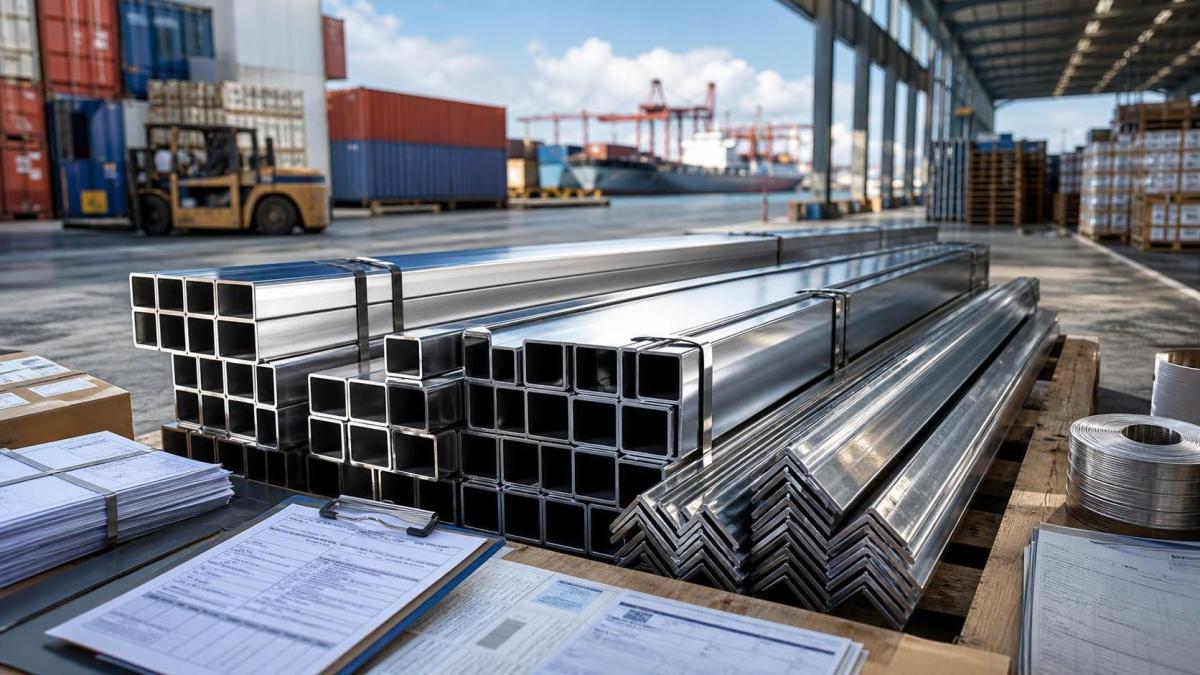
The confirmed facts are limited but clear. The European Commission formally initiated the anti-subsidy investigation on August 6, 2026, targeting stainless steel sections originating in China. The products referenced include HS codes 7222.20 and 7222.30, among others, and cover hot-rolled, cold-rolled, and special-profile stainless steel sections. The stated investigation period reaches back to July 2025. Based on the information provided, the measure is expected to directly affect customs procedures for EU importers, the payment of deposits, and related procurement and compliance processes during the coming 12 to 18 months.
Where the immediate pressure may appear in the supply chain
Import-side execution may become more complex
From an industry perspective, EU importers are the first group likely to feel the operational impact. The reason is straightforward: customs clearance and deposit-related procedures are directly named in the event summary. In practice, this means import transactions involving the covered stainless steel sections may require closer monitoring of documentation, timing, and landed-cost calculations.
Procurement teams may face a wider cost-control challenge
Buyers and sourcing teams connected to stainless steel sections may also be affected because the event points to possible changes in procurement costs over the next 12 to 18 months. Analysis shows that even before any final outcome is known, procurement planning may need to account for compliance-related friction, additional cash-flow considerations tied to deposits, and potential changes in delivery planning.
Processors and downstream manufacturers may need tighter coordination
Companies that use imported stainless steel sections in further processing or manufacturing are not identified as direct subjects of the investigation, but they may still be influenced through supply timing, material availability planning, and commercial discussions with import partners. What deserves closer attention is whether procurement assumptions, contract timing, and order confirmation cycles need adjustment while the case remains under review.
Service providers around trade compliance may see higher demand
Customs brokers, trade compliance advisers, and logistics coordinators may become more involved because the event directly touches customs clearance and procedural compliance. Observably, when a product category enters a formal trade investigation, the practical burden often shifts toward document accuracy, classification checks, and communication across supplier, importer, and customer teams. In this case, those process points deserve attention even without assuming any final trade outcome.
What companies should watch from this point
Track official wording and scope carefully
The immediate priority is to follow how the official scope is described in subsequent notices or procedural updates. Since the announced coverage includes multiple stainless steel section categories and HS codes such as 7222.20 and 7222.30, businesses should review whether their products, declarations, and product descriptions align precisely with the stated scope.
Separate policy signal from immediate business execution
Analysis shows that an investigation announcement and a final trade outcome are not the same thing. However, the business effect can begin earlier through customs handling, deposit obligations, and compliance reviews. Companies should therefore distinguish between what has already changed operationally and what remains subject to further development.
Recheck documents, timelines, and supplier coordination
For affected transactions, attention should focus on product classification, supporting trade documents, shipment timing, and communication with suppliers and customers. This is especially relevant where delivery schedules, quotation validity, or contract execution may be sensitive to changes in clearance procedures or temporary cost assumptions.
Prepare for a longer decision window
The event summary points to a 12 to 18 month period of potential impact on procurement costs and compliance procedures. That makes scenario planning important. Businesses do not need to assume a fixed result, but they do need to prepare for a period in which cost forecasting, internal approvals, and customer communication may require more frequent revision.
How this development is best understood at this stage
Observably, this announcement should not be read as a final market outcome. It is more appropriate to understand this as a formal procedural signal with immediate operational relevance. The significance lies less in a concluded result and more in the fact that import-related execution, compliance preparation, and procurement decision-making may now need closer control.
From an industry perspective, the case also deserves continued attention because it combines two different timelines: a formal investigation timeline that reaches back to July 2025, and a forward-looking business timeline in which customs, deposit, and sourcing implications may unfold over the next 12 to 18 months. That combination makes this an active trade development rather than a closed policy event.
A near-term procedural issue with broader watch value
At this stage, the most balanced reading is that the European Commission's move creates an immediate procedural and cost-management issue for the relevant stainless steel trade flow, especially on the EU import side. It would be premature to treat the case as a settled commercial outcome, but it would also be risky to treat it as a routine headline with no operational effect. For industry participants, this is best understood as a live development that warrants close monitoring rather than a conclusion that can already be priced in with certainty.
Basis of this article and what still needs verification
This article is based on the user-provided news title, event date, and event summary concerning the European Commission's anti-subsidy investigation into stainless steel sections from China. For this type of development, relevant source categories typically include official government or regulatory notices, company disclosures, industry association updates, authoritative media reporting, and trade-related standard or customs documentation. A specific official source link was not provided in the input, so further verification remains necessary. Continued attention should focus on any subsequent official wording, scope clarification, procedural updates, and practical guidance affecting customs, deposits, procurement, and compliance execution.

By clicking 'Allow All', you agree to the storage of cookies on your device to enhance site navigation, analyze site usage and assist with our marketing efforts. Coo Cookie Notice
Please give us a message
SHANDONG LUBAO METAL GROUP CO., LTD.