


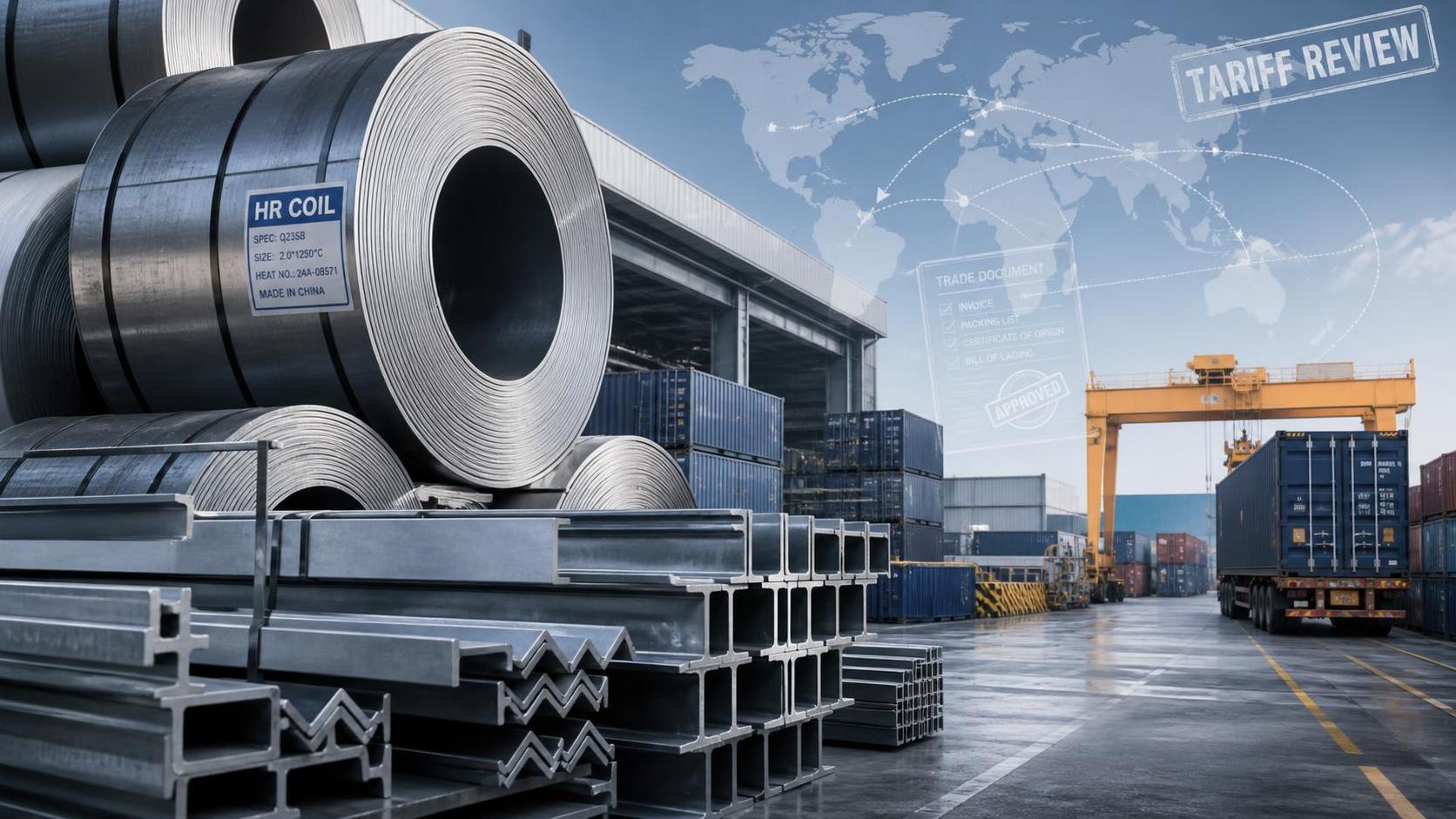
On August 7, 2026, the U.S. Department of Commerce announced a new Sunset Review of the anti-dumping order on hot-rolled coil (HR Coil) from China and said a countervailing duty review will proceed in parallel. For companies tied to steel structures, automotive production, home appliances, and cross-border sourcing, this is not just a procedural update: it directly affects how duty exposure, customs cost assumptions, procurement budgets, and longer-term contract pricing may need to be assessed in the near term.
What the current review will decide
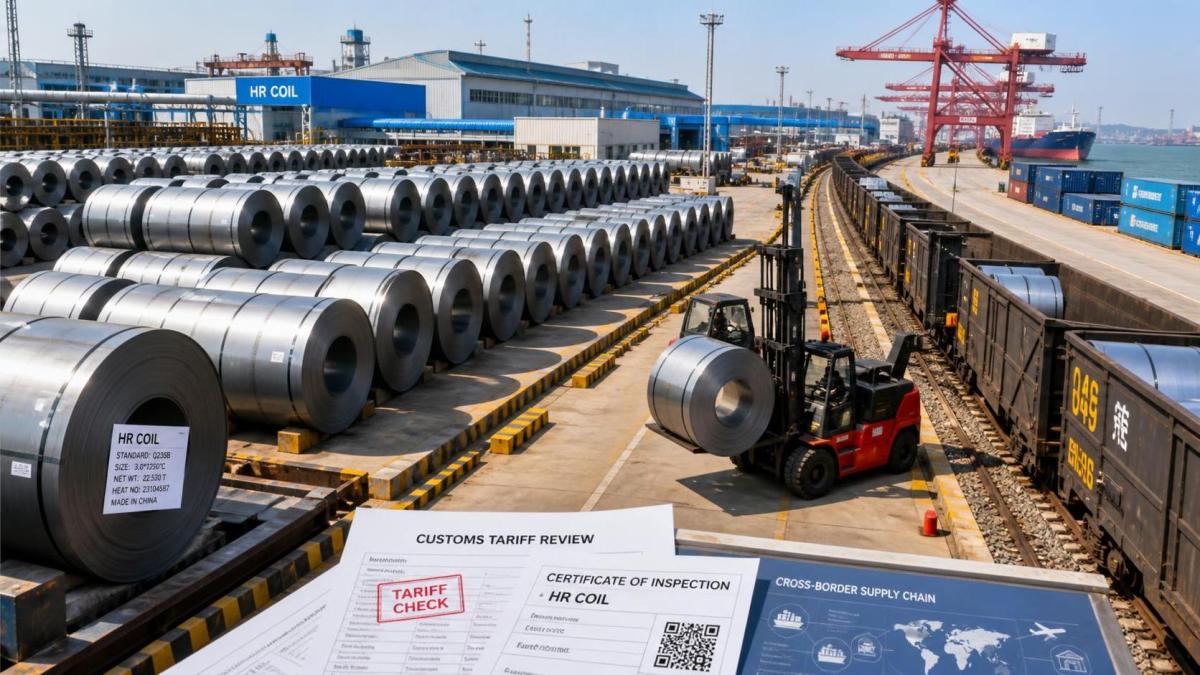
The confirmed facts are limited but commercially significant. The review announced by the U.S. Department of Commerce on August 7, 2026 concerns the first Sunset Review of the anti-dumping duty order covering HR Coil originating in China. A review of the related countervailing duty order will take place at the same time. The outcome will determine whether the current combined trade remedy burden, described in the input as reaching 21.5% to 48.3%, remains in force through 2029. The product involved is widely used in overseas supply chains for steel structures, automobiles, and home appliances.
Where the pressure points may emerge across the supply chain
Import cost planning becomes more sensitive for trading parties
Analysis shows that direct trading companies and importers are likely to feel the most immediate pressure in customs cost modeling and transaction planning. Because the review concerns whether existing duty levels continue, the practical issue is not only current landed cost, but also how companies frame exposure in quotations, declarations, and forward purchase commitments. What deserves closer attention is the treatment of duty assumptions in ongoing business rather than any premature conclusion about final review results.
Procurement teams may need tighter pricing and sourcing discipline
From an industry perspective, procurement departments using HR Coil for downstream manufacturing may face a narrower margin for error in budget setting and long-cycle purchasing. Where contracts or internal plans depend on stable import cost expectations, this review can affect the way buyers compare sourcing options, structure price validity periods, and evaluate long-term order commitments. The key issue is not a confirmed rule change in execution yet, but the renewed uncertainty around whether the current tariff burden will continue.
Manufacturers and project-based users may see delivery decisions tied more closely to trade compliance
For processors and manufacturers serving steel structure, automotive, and appliance supply chains, the review matters because material cost and delivery planning are often linked. Observably, if duty treatment remains a live issue during order planning, compliance review, document readiness, and supplier coordination may become more important in shipment scheduling and customer quotation management. This is especially relevant where delivery timing and final pricing are committed before the policy path is fully clear.
Supply chain service providers may need closer document coordination
Logistics, customs, and other supply chain service providers may be affected through the documentation and execution side of trade. Analysis shows that when a reviewed duty order directly influences clearance cost, service providers often need to align more carefully with importers on product scope, trade documents, and cost communication. The present information does not establish any new filing rule or customs procedure, but it does signal that trade-compliance coordination remains commercially important.
What companies should watch while the review is underway
Track official wording and any later clarification
It is more appropriate to understand this stage as a live regulatory process rather than a settled outcome. Companies exposed to HR Coil transactions should monitor subsequent official language related to the anti-dumping and countervailing duty reviews, especially where later notices may affect business interpretation, planning assumptions, or internal compliance review.
Recheck contract language tied to duty allocation and pricing
Analysis shows that businesses with open quotations, framework supply arrangements, or long-term orders should revisit how duty risk is addressed in commercial documents. The current input confirms that clearance cost, procurement budgets, and long-term pricing strategies are directly affected, so practical attention should go to clauses dealing with tax burden, price adjustment, and delivery responsibility.
Review document readiness for cross-border transactions
From an industry perspective, companies should also pay attention to whether product descriptions, technical files, shipping documents, and transaction records are internally consistent. The available facts do not provide a new documentation rule, but when a trade remedy review is active, document discipline becomes more relevant to customs handling, supplier communication, and internal audit preparedness.
Watch downstream tendering and customer responses
Observably, businesses supplying projects or manufacturing customers may need to monitor whether tender documents, procurement terms, or buyer requests begin to reflect greater caution on imported HR Coil cost assumptions. This should be treated as a point for observation, not as a confirmed market-wide change.
Why this matters beyond a routine notice
Analysis shows that the announcement is important because it sits at the intersection of trade remedy policy and industrial purchasing decisions. It is not merely a headline about a review opening; it is also a signal that companies relying on Chinese-origin HR Coil for overseas supply chains may need to keep duty continuity risk in active consideration. At the same time, the event should not yet be read as a final policy result. What deserves closer attention is how the review process is interpreted in commercial practice, including budgeting, sourcing, and customer pricing behavior.
How this update is best understood now
At this stage, the development is best understood as an execution signal with material commercial relevance, but not yet as a completed rule outcome. The core industry significance lies in the possibility that existing anti-dumping and countervailing duty rates may continue through 2029, which keeps cost and planning uncertainty alive for affected market participants. A neutral reading is therefore more appropriate: the review has started, its implications are real, and the final direction still requires continued observation.
Basis of this article and points requiring continued verification
This article is based on the user-provided news title, event date, and event summary. For developments of this kind, commonly relevant source types include official government notices, releases from regulatory authorities, customs or trade administration information, industry association updates, standards-related documents, and reporting by authoritative media. A specific official source link was not provided in the input, so the underlying notice and any later procedural updates still need to be verified on an ongoing basis. What also requires continued attention includes later policy details, interpretive guidance, procurement document changes, market feedback, and how affected companies implement trade and compliance responses in practice.

By clicking 'Allow All', you agree to the storage of cookies on your device to enhance site navigation, analyze site usage and assist with our marketing efforts. Coo Cookie Notice
Please give us a message
SHANDONG LUBAO METAL GROUP CO., LTD.