


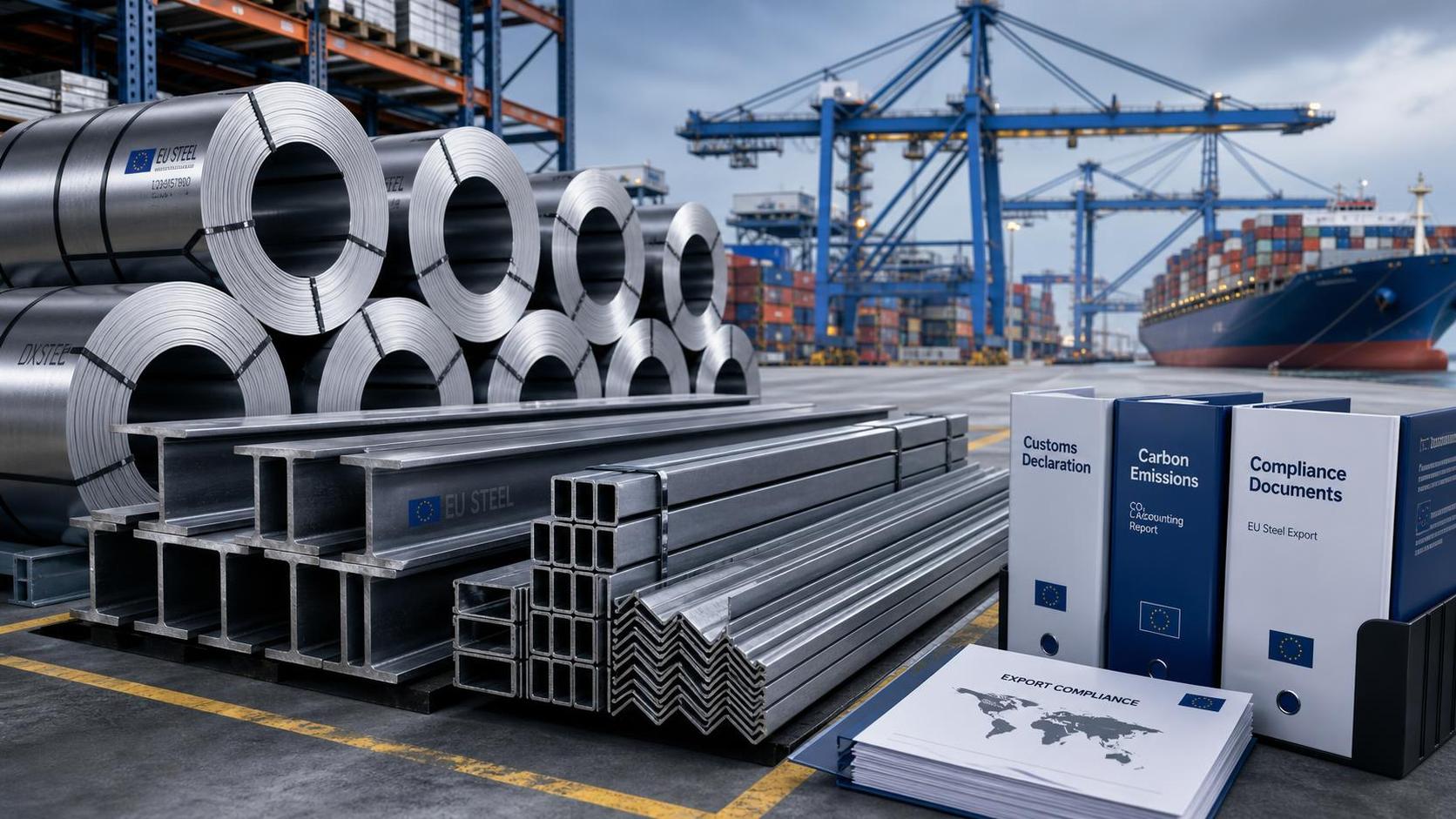
On August 1, 2026, the European Commission formally moved into the third transitional phase of CBAM reporting for certain steel products, creating a more concrete compliance requirement for Chinese exporters shipping items such as hot-rolled coil, H-beams, and cold-formed sections to the EU. For companies involved in export sales, customs preparation, emissions documentation, supplier coordination, and delivery scheduling, this matters because quarterly carbon reporting through the EU CBAM portal is no longer an abstract policy topic but an operational requirement tied to customs clearance and port-related cost exposure.
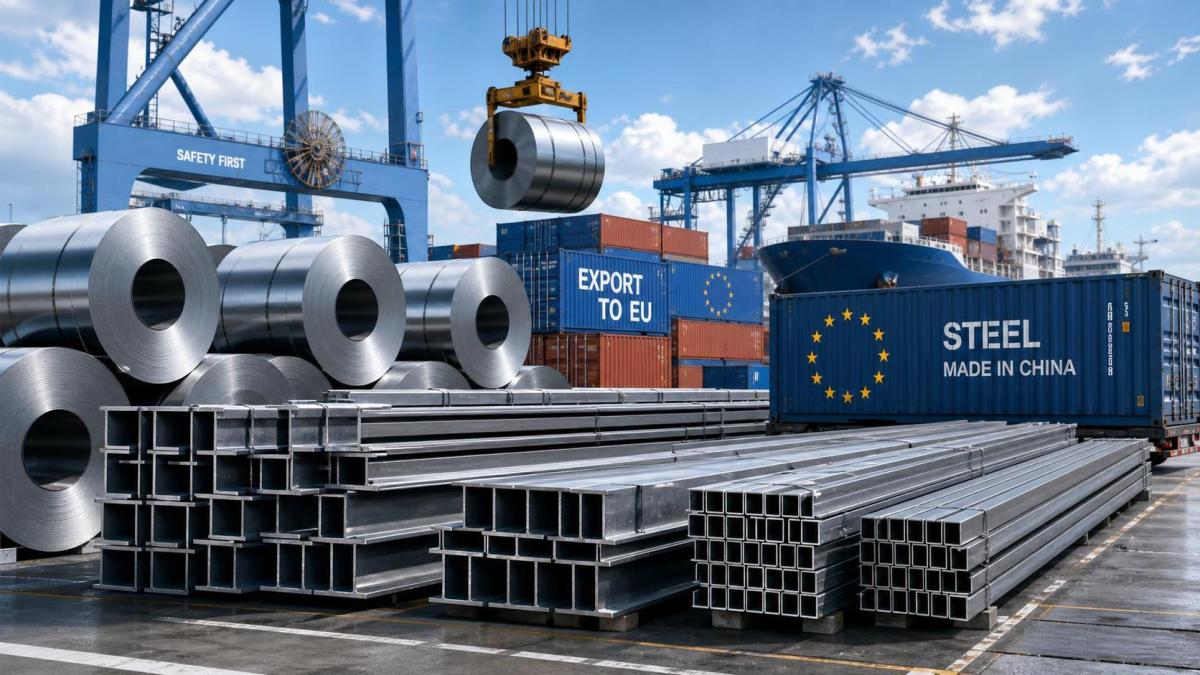
What Has Taken Effect From August 1
The confirmed change is that, from August 1, 2026, the third transitional phase of EU CBAM has officially started for the steel and section products described in the provided information. Chinese exporters shipping products including hot-rolled coil, H-beams, and cold-formed sections to the EU are required to complete quarterly carbon emissions reporting through the EU CBAM portal. They must also submit a declaration of embedded carbon emissions that has been verified by a recognized third-party body. According to the provided event summary, failure to complete compliant reporting may result in customs clearance delays and additional port storage-related costs.
Where the Pressure Is Likely to Appear First
Export transactions now depend on emissions documentation readiness
From an industry perspective, exporters are the first group directly exposed to this rule change because the reporting obligation is linked to shipments entering the EU market. The practical impact is likely to appear in document preparation, submission timing, and coordination between commercial teams and compliance staff. What deserves closer attention is whether each shipment category that falls within the described steel scope can be matched to the required quarterly reporting and verified embedded carbon declaration.
Manufacturing and processing links may face new data coordination demands
Analysis shows that manufacturers and processors supplying the affected steel products may be pulled more deeply into export compliance workflows, even when they are not the final exporter of record. The reason is straightforward: the required embedded carbon declaration must be supported by information that exporters can actually report and submit. In business terms, this may shift pressure upstream into production data collection, internal record consistency, and document handover between factories, traders, and overseas customers.
Supply chain and logistics service providers may see tighter delivery management
Observably, customs brokers, freight coordinators, and other supply chain service providers may also be affected because non-compliant reporting is stated to create customs delays and extra port costs. The impact is not that logistics providers become the reporting party, but that shipment timing, document completeness checks, and handoff accuracy may become more sensitive in export execution. For delivery planning, the compliance file may become as important as the commercial shipping file.
EU-facing buyers and sourcing teams may increase document scrutiny
For buyers and sourcing teams handling affected steel categories, the rule change may alter procurement review at the order and pre-shipment stages. Analysis shows that the immediate concern is not simply product availability, but whether suppliers can support quarterly CBAM reporting and provide a verified embedded carbon declaration in time for shipment and clearance. This may influence supplier screening, order scheduling, and document expectations in ongoing EU-related business.
What Companies Should Track in Current Operations
Confirm product scope against active export business
Companies shipping to the EU should first review whether their active or planned exports include the steel products named in the event summary, such as hot-rolled coil, H-beams, and cold-formed sections. Where the product mix is close to these categories, the immediate practical issue is whether internal teams are already treating those shipments as subject to the new quarterly reporting requirement.
Check whether reporting files and verification workflows are aligned
Analysis shows that the new requirement is not limited to entering data into the EU CBAM portal. The provided information also points to the need for a declaration on embedded carbon emissions verified by a recognized third-party body. Companies should therefore pay close attention to whether their current documentation, technical records, and external verification arrangements can support timely filing without creating shipment bottlenecks.
Reassess delivery schedules where customs timing is sensitive
Because the provided information states that non-compliance may lead to customs clearance delays and extra port costs, firms with tight delivery windows should review whether current shipping plans leave enough time for reporting and document checks. This is especially relevant for businesses where delayed clearance can affect downstream installation, contract delivery milestones, or warehouse turnover.
Keep watching for execution language and market practice
What deserves closer attention is that the provided information confirms the reporting requirement and the consequence of non-compliance, but it does not provide broader implementation detail. For that reason, companies should continue monitoring official wording, filing practice, verification expectations, and any changes in document requests from trading counterparties. This should be treated as an active compliance watchpoint rather than a fully settled operational routine.
How This Change Is Best Understood Right Now
Observably, this development is better understood as an implementation signal rather than a distant policy discussion. The key point is that CBAM compliance for the affected steel exports now reaches the level of recurring quarterly reporting and third-party-verified embedded carbon declarations. At the same time, analysis shows that the market still needs to watch how reporting practice, verification interpretation, and transaction-level document expectations develop in actual execution.
The Practical Reading for the Steel Trade
In practical terms, this event signals that CBAM-related obligations for the specified steel products should now be treated as part of export delivery preparation to the EU, not as a background regulatory topic. A neutral reading is that the change has already crossed into operational relevance, especially for exporters and supply chain participants exposed to customs timing and document completeness. It is more appropriate to understand this as a rule now taking effect in business execution, while still leaving room for continued observation of filing practice and market response.
Basis of This Article and What Still Needs Verification
This article is generated from the user-provided news title, event date, and event summary. For events of this type, relevant source categories typically include official announcements, regulator releases, customs or trade authority information, industry association updates, standard-setting documents, and reporting from authoritative trade media. No specific official source link was provided in the input, so the exact official publication path still requires further verification. Observably, the areas that remain worth monitoring include implementation detail, verification practice, document expectations in tenders or trade files, industry feedback, and how companies are carrying the requirement into day-to-day export execution.

By clicking 'Allow All', you agree to the storage of cookies on your device to enhance site navigation, analyze site usage and assist with our marketing efforts. Coo Cookie Notice
Please give us a message
SHANDONG LUBAO METAL GROUP CO., LTD.